


Wind Turbine Transport Trailer
A turbine blade possesses a moderate weight combined with an extreme overall length. During transit, the blade extends far beyond the trailer and tractor combination, creating strict requirements for off-tracking, tail-swing, ground clearance, and overhead clearance.
Wind turbine components present unique transport challenges compared to conventional heavy cargo.
A turbine blade possesses a moderate weight combined with an extreme overall length. During transit, the blade extends far beyond the trailer and tractor combination, creating strict requirements for off-tracking, tail-swing, ground clearance, and overhead clearance.
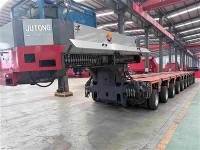
Specialized heavy transport trailers are designed and manufactured for wind energy logistics, including extendable multi-axle configurations. Depending on project requirements, trailers can be equipped with hydraulic steering, air or mechanical suspension, hydraulic lifting systems, and custom blade support fixtures.
Vehicle configuration is determined by cargo specifications and route topography rather than fixed standard models.
Key Technical Parameters
|
Parameter |
Specification Scope |
|
Trailer Type |
Wind turbine component transport trailer |
|
Primary Cargo |
Wind turbine blades, tower sections, and heavy components |
|
Frame Structure |
Extendable box-type or telescope configuration |
|
Axle Configuration |
Multi-axle, project-specific spacing |
|
Steering System |
Mechanical, hydraulic, or self-steering options |
|
Suspension |
Heavy-duty mechanical or air suspension |
|
Blade Support |
Custom-engineered cradles and mounting adapters |
|
Hydraulic Equipment |
Integrated power units for steering, lifting, and extension |
|
Braking System |
Air brakes equipped with ABS/EBS per market standards |
|
Electrical System |
24V configuration matching regional requirements |
|
Platform Height |
Engineered to cargo center-of-gravity and route clearance |
|
Payload Capacity |
Calculated from cargo weight and regional axle limits |
Product Features
Exceptional Telescopic Adaptability: Features a high-strength box-type extendable main frame that allows flexible adjustment of overall vehicle length across a wide range, perfectly accommodating varying generations and lengths of wind turbine blades.
Comprehensive Steering & Maneuverability: Integrated multi-axle hydraulic steering or all-wheel steering systems grant the ultra-long vehicle exceptional tracking capability, easily navigating tight turns, mountain switchbacks, and complex wind farm access roads.
Composite Material Friendly Protection: Equipped with precision-engineered blade support cradles and hydraulic cushioning systems that effectively absorb high-frequency vibrations and impacts during transit, providing comprehensive protection for high-value composite blades.
High-Strength Steel & Lightweight Design: Critical load-bearing structures utilize premium international high-strength steel (such as Q960 or equivalent grades), delivering extreme bending and torsional rigidity while achieving optimal weight reduction to maximize payload capacity.
Intelligent & Safety Integration: Equipped with advanced ABS/EBS pneumatic braking systems, multi-circuit hydraulic protection valve blocks, and international-standard 24V all-weather LED lighting and warning systems to ensure safety during adverse road conditions and night operations.
Product Applications
Onshore Wind Farm Construction Projects: Extensively utilized for mid-to-long distance and final-mile transport of complete wind turbine component sets-including ultra-long blades, tower sections, nacelles, and hubs-from manufacturing facilities or ports to project job sites.
Oversized Heavy Haul & Special Logistics: Leveraging its exceptional extension capability and multi-axle heavy-load distribution, the trailer can also be adapted for the specialized highway transport of large aerospace components, ultra-long structural steel, bridge prefabricated elements, and other extreme-dimension heavy cargo.
How to Select the Right Wind Turbine Transport Trailer
Selecting transport equipment requires working backward from transport task requirements.
Confirm the Cargo
Provide blade model and overall length.
Verify blade weight and center of gravity.
Supply root diameter, mounting interface drawings, and required support points.
Confirm the Tractor
Verify tractor make, model, and engine power.
Check fifth-wheel load rating and mounting height.
Identify hydraulic output capacity and electrical connections.
Confirm the Transport Route
Review road width and minimum curve radii.
Evaluate maximum gradients and bridge load limits.
Check permitted axle loads and overhead clearance limits along the corridor.
Determine Trailer Configuration
Engineers evaluate the collected data to determine:
Axle quantity and spacing
Steering mechanism type
Required extension length
Platform height and blade cradle elevation
Hydraulic and suspension setups
Axles, Suspension, and Braking
Running Gear
Multi-axle configurations are engineered with optimized spacing to comply with legal axle loads, distribute payload evenly, and maintain tire service life.
Suspension Systems
Mechanical suspension provides rugged reliability for rough terrain, while air suspension offers load leveling, adjustable platform heights, and smoother ride characteristics for delicate composite cargo.
Braking Systems
Braking configurations utilize pneumatic systems equipped with premium components, automatic slack adjusters, and ABS/EBS packages aligned with regional safety regulations.
Hydraulic System Options
Hydraulic systems provide controlled movement for trailer positioning and cargo manipulation. Depending on the configuration, integrated hydraulics can manage:
Multi-axle hydraulic steering
Trailer frame extension and retraction
Blade lifting and tilting
Blade cradle adjustment
Platform leveling
Hydraulic suspension stroke
Power units are sized according to required oil flow, operating pressure, duty cycles, and control interfaces (including remote control options).
Customization Options
Because wind logistics projects vary widely, trailers are tailored to exact project demands:
Customized frame extension lengths
Adjustable axle quantities and track widths
Specialized hydraulic steering mechanisms
Engineered blade cradles and adapter plates
Tailored hydraulic power units and control interfaces
Specific tire sizes, brands, and spare carrier layouts
Regional lighting and electrical connections
Custom paint finishes and corporate branding
Manufacturing and Quality Control
Heavy wind transport assemblies integrate structural steel, running gear, hydraulic circuits, pneumatic brakes, and electronic controls into a unified vehicle system.
Quality assurance protocols examine critical milestones:
Dimensional accuracy of extendable main frames
Weld penetration verified via non-destructive testing
Axle parallel alignment and steering geometry calibration
Hydraulic pressure testing and cylinder operation checks
Complete pneumatic braking and electrical circuit verification
Shipping and Logistics Solutions
Shipping Methods: Transported via Flat Rack (FR) containers, Roll-on/Roll-off (Ro-Ro) vessels, or Break Bulk cargo ships depending on dimensions.
Export Protection: Marine anti-corrosion wax, moisture-proof VCI films, and heavy-duty wooden crates safeguard components against ocean humidity.
Documentation Support: Full compliance package provided, including Bills of Lading, Certificates of Origin, test reports, and technical manuals.
FAQ
Q: What type of wind turbine components can this trailer transport?
A: The trailer can be configured for wind turbine blades, tower sections, hub assemblies, and nacelle-related equipment using specialized support fixtures.
Q: Can the trailer accommodate different blade lengths?
A: Yes. Extendable frame configurations are utilized when transport fleets must handle varying blade lengths across multiple project sites.
Q: Is hydraulic steering available for complex routes?
A: Hydraulic steering systems can be integrated into multi-axle configurations to improve tracking capability on tight turns, roundabouts, and narrow access roads.
Q: Can the trailer interface be customized for specific turbine models?
A: Yes. Blade cradles and mounting adapters are engineered to match specific root diameters, weight distributions, and mounting brackets provided by the turbine manufacturer.
Q: What information is required to begin a quotation?
A: At minimum, provide blade length, weight, model information, tractor specifications, and the destination country. Route survey data is recommended for detailed configuration engineering.
Q: Are these trailers suitable for mountain wind farms?
A: Trailers can be equipped with specialized steering and suspension setups for difficult access routes, provided road widths, curve radii, gradients, and axle-load limits are evaluated beforehand.
Q: Can vehicle specifications match regional standards?
A: Yes. Braking, lighting, electrical, axle capacities, and dimensional parameters are configured to align with destination market regulations prior to production.
Hot Tags: wind turbine transport trailer, China wind turbine transport trailer manufacturers, flatbed semi trailer, purchasing special trailer, semi trailer body, semi trailer hauling, semi trailer warranty, side dump special trailer
Previous
No InformationYou Might Also Like


Send Inquiry