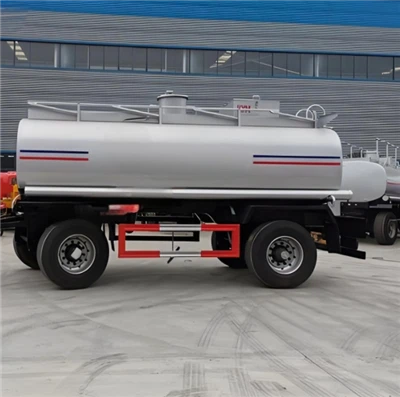
Hey there! I'm a supplier of tank trailers, and I know how crucial it is to ensure these trailers are leak - free. Leaks can cause a whole bunch of problems, from environmental hazards to financial losses. So, let's dive into how tank trailers are inspected for leaks.
Visual Inspection
The first step in any leak inspection is a simple but effective visual check. This is like a quick once - over of the trailer. You start by walking around the entire tank trailer. Look for any obvious signs of damage like cracks, dents, or rust. These imperfections can often lead to leaks over time.
Check the seams of the tank. The seams are where different parts of the tank are joined together, and they're a common spot for leaks to start. Even the tiniest crack in a seam can turn into a big problem. Also, take a close look at the fittings and valves. These parts need to be tightly sealed. If you see any signs of corrosion or loose connections, it could be a sign of a potential leak.
Pressure Testing
After the visual inspection, pressure testing comes into play. This is a more in - depth way to check for leaks. First, we seal all the openings of the tank trailer, including the vents, valves, and filling ports. Then, we use a special pump to fill the tank with air or an inert gas, like nitrogen, up to a specific pressure level. This pressure is usually set according to the trailer's specifications and industry standards.
Once the tank is pressurized, we wait for a set period, usually around 30 minutes to an hour. During this time, we keep a close eye on the pressure gauge. If the pressure drops, it means there's a leak somewhere. To find the exact location of the leak, we can use a soapy water solution. We spray the solution on the outside of the tank, especially on the seams, fittings, and valves. If there's a leak, the pressure inside the tank will force air out through the hole, and it'll create bubbles in the soapy water. That's how we can pinpoint exactly where the problem is.
Ultrasonic Testing
Ultrasonic testing is another advanced technique we use. It's great for detecting leaks that might not be visible to the naked eye or even detectable through pressure testing in some cases. This method uses high - frequency sound waves.
A special ultrasonic detector is used to scan the surface of the tank. When the sound waves hit a defect or a leak, they bounce back in a different way than they would from a solid, intact surface. The detector can pick up these changes in the sound waves, and it gives us an indication of where there might be a problem. This is really useful for finding small cracks or porosity in the tank material that could lead to leaks down the line.


Dye Penetrant Testing
Dye penetrant testing is often used for smaller, hard - to - find leaks, especially in areas with complex shapes or tight spaces. First, we clean the surface of the area we want to test really well to make sure there's no dirt or grease that could interfere with the test.
Then, we apply a special dye to the surface. The dye is designed to seep into any cracks or pores. After letting it sit for a while, we wipe off the excess dye and apply a developer. The developer draws the dye out of any cracks, making them visible as bright, colored lines. This way, we can identify even the smallest leaks that might otherwise go unnoticed.
Importance of Regular Inspections
Regular inspections for leaks are super important. For one thing, it helps keep the environment safe. If a tank trailer carrying hazardous materials like fuel or chemicals leaks, it can contaminate the soil, water sources, and air. That's a huge risk not just for the immediate area but also for the long - term health of the ecosystem.
From a business perspective, it saves money. Catching a leak early on means you can fix it before it gets worse and causes more damage. A small crack that's addressed right away might just need a simple repair, but if it's left untreated, it could lead to a major failure of the tank, which is a lot more expensive to fix or even require a whole new tank.
Our Tank Trailer Offerings
As a tank trailer supplier, we've got a great range of trailers to suit different needs. We have the 40 Cbm Cement Tranker Trailer, which is perfect for transporting cement. It's built to be durable and reliable, and we ensure that every one of these trailers goes through a thorough leak inspection before it leaves our facility.
If you're in the fuel industry, our Fuel Tank Trailer is a great choice. These trailers are designed with the latest safety features and are rigorously tested for leaks. And for those who need a larger capacity, we offer the 45000 Liters Aluminum Fuel Tanker Trailer. This aluminum trailer is not only lightweight but also highly resistant to corrosion, which helps prevent leaks in the long run.
Contact Us for Procurement
If you're in the market for a tank trailer and want to ensure you're getting a high - quality, leak - free product, we'd love to talk to you. Our team has years of experience in providing top - notch tank trailers, and we're committed to your satisfaction. Whether you have questions about our inspection processes or want to discuss your specific requirements, don't hesitate to reach out. We're here to help you find the perfect tank trailer for your business.
References
- American Petroleum Institute (API). Standards for tank trailer construction and inspection.
- Federal Motor Carrier Safety Administration (FMCSA). Regulations on tank trailer safety and inspections.
- National Fire Protection Association (NFPA). Guidelines for handling and transporting hazardous materials in tank trailers.