

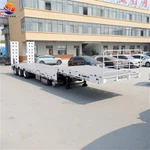


Tank Trailer
Shandong Jutong: Your Premium Cement Mixer Truck
Supplie
Shandong Jutong Special Vehicle Co., Ltd. is a professional semi-trailer manufacturer and used truck export supplier. Our company is located in Liangshan County, Shandong Province, China, which is known as a semi-trailer manufacturing base. At present, the company has more than 1,000 employees, including 670 senior professional and technical personnel and 32 professional technical personnel. Our workshop covers an area of over 1.5 million square meters, with main products of semi-trailers, trucks and trailers, dump trailers, dump trucks, etc., which are exported to Russia, the Middle East, Australia, Central Asia, Southeast Asia, Africa and other places.
Rich Experienced
Our team has been engaged in semi-trailer manufacturing for more than 20 years and has independent design, production and quality inspection capabilities. At present, our company has become a professional vehicle manufacturer recognized by the Ministry of Industry and Information Technology.
Well Equipped
Our company has more than 118 pieces of advanced equipment, including CNC cutting machines, automatic welding machines, WADF, X-ray detectors, four-wheel alignment devices, etc., with an annual output of more than 4,000 trailers, supporting large quantity orders.
Quality Assurance
Our products all undergo strict inspection procedures such as impact resistance, strength and appearance inspection after production, and have obtained certificates such as ISO, CCC and compulsory product certification.
Customized Services
Our team is online around the clock to promptly respond to your product inquiries, designs, and OEM and ODM order requirements, and provide customization services for product materials, appearance, and different components.


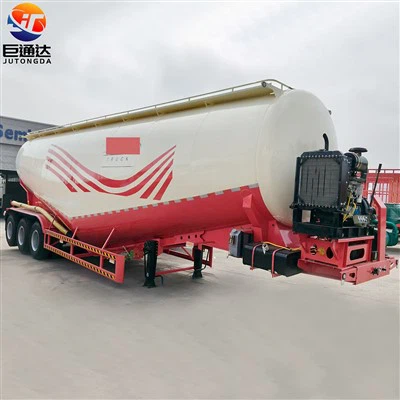


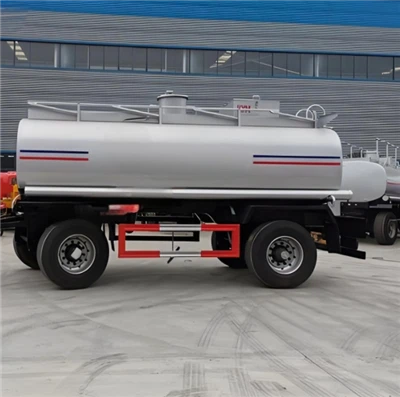


The tank trailer is a trailer truck or tractor-trailer with a tank body, suitable for transporting gases or liquids, as oil, gasoline, or milk, in bulk. It's easy to spot them on the open road due to their sleek, glistening tank. Other common terms for this vehicle style are fuel tank trailers and tanker trailers. They are built to hold liquids and dry materials for easy, safe transportation, and their tank may be divided into different sections by partitions, allowing drivers to carry different materials in the same load. Also, the height of the tanker trailer is usually designed so that bridge height is not a problem, making it easier to build out your route.
Features of Tank Trailer
Wide Uses
Our tank carts are used in a variety of applications including the transportation of petroleum, chemicals and other specialty applications. They are also involved in the cement production process and are used to transport cement, sand and stone powder.
Durable Material
The materials of these tank trucks are available of carbon steel, stainless steel, aluminum alloy, etc., and different surface treatments and anti-corrosion finishes are added according to the transported medium and the volume of the tank to make them less likely to deform.
Safe Design
The bottom of their tanks is equipped with an emergency shut-off valve, which not only allows refueling from the bottom, but also can quickly cut off the under-vehicle pipeline and the tank in the event of an accident to ensure the safety of the tank.
Customizable
Our tank trailers can also be customized according to the oil transportation volume. For example, you can choose special pumps, flow meters, computerized tax tankers, gravity valves, etc. to improve transportation efficiency.
Types of Tank Trailer
These tank trailers come in a variety of shapes and sizes to account for the hauling of different petroleum by-products such as ethanol, diesel, and gasoline. The different types of shapes are double taper, straight-bottom, and troughed. These types of trailers can be 1 to 6 compartments and anywhere from around 3000 Gallons to around 8000 Gallons depending on your load density and product. Some features worth noting before buying petroleum/gas tank trailers are things such as metal, capacity, code, shape, vapor recovery, hose carrier, and overfill.
Tank trailers supporting all dry bulk goods such as resin pellets, sand, and powders. They are measured by cubic feet in how much they can haul and have a designation of a ‘small cube’ and ‘large cube’ based on the cubic feet area. The main feature of these dry bulk trailers is the manholes that drop the material from below to allow for an easy flow. Some features worth noting before buying dry bulk tank trailers are things such as shape, code, capacity (small cube vs large cube), manways, and aeration.
Chemical tank trailers allow for the transport of sensitive materials that contain certain pressure or heat ratings that need to be maintained. This liquid is usually acidic, corrosive, flammable, or toxic. Most of these trailers use high-quality stainless steel that is durable for these potentially dangerous products. Capacity usually sits around 3,800 gal. and can be as much as around 11,000 gals. Sub-categories include trailers such as an FRP trailer which includes reinforced plastic for corrosive products. Some features worth noting before buying chemical tank trailers are shape, code, capacity, insulation, pressure rating, and heat rating.
Specifically designed to haul oil from worksite to any destination. Some features worth noting before buying crude trailers are shape, capacity, pressure rating, overfill, and vapor recovery.
These types of trailers are specific for asphalt in that they are more insulated than normal tank trailers and usually contain a heating device to keep the asphalt in a non-solid state while transporting. Also known as hot oil tank trailers. Some features worth noting before buying asphalt tank trailers are things such as shape, capacity, heat rating, and pressure rating.

The unique shape of a tanker trailer offers a number of benefits when carrying liquids and gaseous materials, which are the primary types of cargo they transport. Here are a few reasons why tankers are shaped like cylinders:
More stable: Rounded edges don't require as much reinforcement as a typical container that has corners and straight sides, meaning less pressure on the tank itself.
Lower center of gravity: Ideal when carrying flammable materials like fuel and oil
Helps prevent liquid 'surge': Liquid naturally moves around in the tanker, but the cylinder shape helps to prevent excessive surging. Some tankers have bulkheads within the tank to help minimize surge as well. Since tankers have weight limits, they cannot be completely filled, meaning liquid surge is always a factor for drivers to consider.
Easier extraction and cleaning: The rounded sides of a cylindrical tanker make for easier extraction since liquid can move down towards the low point. It also prevents material from getting stuck in hard-to-clean corners. Less product left over in the tank after a load means less contamination for the next load.
Factors to Consider When Choose Tank Trailer
The Transport Several fluids are transported using tanks and trucks. These liquids require various trailer bodies since they are chemicals. When it comes to fuel tanks with trailers, such as gasoline and diesel, you should consider carbon steel, stainless steel, and aluminum alloy trailers. Because they don't contaminate liquids, are lightweight, and are simple to clean, aluminum trailers are typically used to transport liquids like edible oils.
Tank Form Regarding the design of tank trailers, you have a few different choices. As a result of their height, they typically have an elliptical, rectangular, or circular geometry. A model with a lower center of gravity is what you should seek if you don't want an extremely long trailer but still need a lot of storage. Make sure you are aware of how the shape of your trailer may affect this since a lower center of gravity improves vehicle stability.
Size of the Tank Trailer's Body A robust tank body is required to convey large volumes of any liquid. The thickness of the tank trailer affects not only the general security of your goods but also how long they will last. You want your trailer to last for many years and not need to be replaced frequently. As a general rule, steel trailers should have a thickness of 12-gauge, stainless steel ones of 14-gauge, and aluminum tank trailers of 1/8-inch.
Quality Criteria You want to make certain that the tank trailer you buy is a high-quality item, just like when you buy any other vehicle. You can determine if there is a sufficient testing process and accountability mechanism in place. Verify that the raw materials used to produce the trailer metal adhere to the necessary criteria because any deviation from those norms could be dangerous. The weld types and the flanges can be used to determine the level of craftsmanship. They deal with a lot of road strain, so they have to be compliant.
Suitable Testing You'll come across the phrase “Statistical Process Control” (SPC) when browsing tank trailers for sale. Using this technique, the company tests selected samples to evaluate the trailer's quality. That can be dangerous, especially when it comes to fuel tanks with trailers. This is because you might get a faulty one that wasn't thoroughly tested and costs you money in the long run.
Safety Attributes You need to be sure your tank trailer can withstand an accident because it will be driven a lot. You must inspect the emergency valve to ensure that it does not leak even after an impact. Check the electrostatic elimination device when inspecting gasoline tank trailers since sparks and fuel might be a deadly mix. Verify that the manufacturer performs pressure and leakage tests. The trailer needs to be well-coated to fend off corrosion and the damaging effects of sea salt or road salt.
Maintenance of Tank Trailer
Keep the Tank Solid The tank is the most noticeable part of your rig, so it should also be the best possible representation of you and your company. This means it should be in good repair, with no leaks, bends, dents, or other deformities which can contribute to structural issues under load.
Clean the Trailer Interior One of the best ways to help keep the tank in good condition is to keep it clean. Many drivers simply don't realize how much of a toll the substances they're hauling, as well as the hauling process itself, can take on the trailer. Going from one region to another, particularly during the winter, can mean exposure to rotating climates, from freezing cold to the searing sun. De-icing compounds can damage electrical connections and similar metal components, while oil contains a compound called hydrogen sulfide that can damage aluminum, a common tank material.
Clean Manhole Gaskets The manhole gaskets on your tank are one of the places that can see some serious build-up of crud and debris. If this isn't cleaned regularly, it will create a problem with sealing or contamination. Just pull the gaskets out, clean them, and replace them. This is something you should be doing about twice a year, or between every change in the product hauled.
Watch Your Tires Closely The tires on tank trailers are required to have a pressure system, but also be of a type with low rolling resistance. All tires on the trailer should have either a pressure monitoring system or an auto-inflation system to face the changing challenges of each load and its weight. The tires also need to have sufficient tread to maintain traction and prevent rollovers from occurring.
Perform Valve Inspections Tank trailers have a number of valves that need to be checked and maintained. These include hydraulic safety valves, and vacuum and pressure valves in the tank that all work together to make sure the load is transported safely. Operators in very cold regions will want to pay close attention to their valves, which can freeze and subsequently malfunction. To help prevent this, make sure they're all lubricated and pressure-tested.
Keep It all Torqued Down Most tank trailers have a significant number of bolts. These all need to be properly maintained and tightened. Components like shock bolts, spring u-bolts, and ring bolts should all be tightened down to proper torque specifications. If a bolt or nut cannot be tightened, it may be stripped and in need of replacement.
Keep up with Cargo Tank Inspections As per DOT regulations, your cargo tank needs to be tested and inspected on a regular basis to ensure that it's safe for usage. Visual inspections of your cargo tank's exterior and leakage tests should be conducted annually. Thickness tests to ensure the cargo tank's interior hasn't been corroded should be performed every two years. Visual inspections of your cargo tank's interior, along with upper coupler inspections and pressure tests, need to be conducted every five years to ensure safe operation.
Certificate Photo

Factory Photo
