

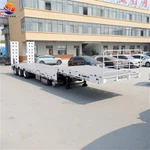


Semi Trailer
Shandong Jutong: Your Premium Cement Mixer Truck
Supplie
Shandong Jutong Special Vehicle Co., Ltd. is a professional semi-trailer manufacturer and used truck export supplier. Our company is located in Liangshan County, Shandong Province, China, which is known as a semi-trailer manufacturing base. At present, the company has more than 1,000 employees, including 670 senior professional and technical personnel and 32 professional technical personnel. Our workshop covers an area of over 1.5 million square meters, with main products of semi-trailers, trucks and trailers, dump trailers, dump trucks, etc., which are exported to Russia, the Middle East, Australia, Central Asia, Southeast Asia, Africa and other places.
Rich Experienced
Our team has been engaged in semi-trailer manufacturing for more than 20 years and has independent design, production and quality inspection capabilities. At present, our company has become a professional vehicle manufacturer recognized by the Ministry of Industry and Information Technology.
Well Equipped
Our company has more than 118 pieces of advanced equipment, including CNC cutting machines, automatic welding machines, WADF, X-ray detectors, four-wheel alignment devices, etc., with an annual output of more than 4,000 trailers, supporting large quantity orders.
Quality Assurance
Our products all undergo strict inspection procedures such as impact resistance, strength and appearance inspection after production, and have obtained certificates such as ISO, CCC and compulsory product certification.
Customized Services
Our team is online around the clock to promptly respond to your product inquiries, designs, and OEM and ODM order requirements, and provide customization services for product materials, appearance, and different components.


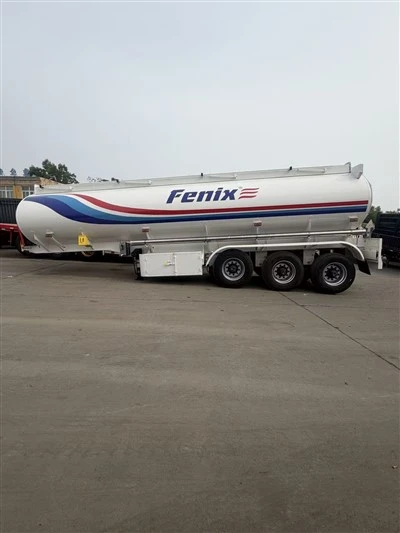


A semi-trailer, also known as a "semi" or "tractor trailer", is a combination of a tractor unit and a trailer. A large proportion of a semi-trailer's weight is supported by a tractor unit, or a detachable front-axle assembly known as a dolly, or the tail of another trailer. The semi-trailer's weight is semi-supported (half-supported) by its own wheels, at the rear of the semi-trailer. A semi-trailer is normally equipped with landing gear (legs which can be lowered) to support it when it is uncoupled. Many semi-trailers have wheels that are capable of being totally dismounted and are also relocatable (repositionable) to better distribute load to bearing wheel weight factors. A road tractor coupled to a semi-trailer is often called a semi-trailer truck or "semi" in North America and Australia, and an articulated lorry or "artic" in the UK.
Features of Semi Trailer
Large Carrying Capacity
Our semi-trailers are ideal for transporting a variety of cargo and can be customized with different types of cargo beds to transport bulky cargo from containers to specialized machinery.
Easy to Maneuver
Their hitch points can be connected to most pavers on the market for loading. They are easier to maneuver than other types of trailers and can transport hot asphalt, ground materials, gravel, etc. from the asphalt mixing station to the pavers safely and efficiently.
Flexible Operation
These semi-trailers are designed with a fully hydraulic drive structure and have dual independent remote control systems to ensure precise coordination between mechanical, electrical and hydraulic systems and to achieve flexible speed conversion.
Efficient Working
These semi-trailers come with a sturdy metal frame construction with fully automatic top trays and hopper doors. In addition, they are equipped with rear cameras to provide a highly automated and convenient operating experience.
Application of Semi Trailer
Vehicle Transportation
When you drive by a car lot all of those cars didn't just magically appear there, they were transported there by heavy duty trucks. This is just one example of what semi-trailers are used for in the area of vehicle transport. Heavy duty trucks are also used to move forklifts, tractors, and various other heavy duty pieces of equipment that are essential for use in various industries. Without prime movers, society would grind to a halt pretty quickly.
Delivery of Goods
The process of transporting goods from a manufacturer to a warehouse, then to a retail outlet is called the supply chain. Heavy duty trucks play a vital role in the supply chain forming the final leg where a product is delivered to a store. Without them warehouses would be full of products that could never make it to consumers. Everything you see on a store's shelves was probably brought there by a semi- truck.


Moving House or Business
Moving house for a person is quite an undertaking. For a business, it's an even more intensive and exhausting process. Businesses have far more property than a normal person or family does. There are computers, and paperwork, and office furniture, and in many cases heavy equipment. When a business relocates it's a major project that relies upon semi-trucks. Semi-trucks are capable of hauling huge loads enabling them to quickly and efficiently help a business through the moving process.
Waste Disposal
Usually once a week the waste disposal company will come by your home to pick up your garbage, then on another day, they’ll pick up the recycling. Once your waste is no longer on your property you probably don't give it a second thought. In larger areas waste is usually transported to a central location before it is disposed of. Once there, it is loaded onto heavy duty trucks where it is sent out to be processed and disposed of.
Types of Semi Trailer

Flatbed trailers offer versatility and as a result are some of the most commonly used trailers. The name stems from the fact that flatbed trailers have a flat deck that is open on all sides and does not have a roof or a box to cover the load. This open layout makes it an easy trailer to load and unload but does not protect cargo from the elements of weather and roads. Flatbed trailers are perfect for shipping wide or large items as the load can be lifted from above with a crane or from the side with a forklift.
(1)Typical Cargo Types
- Construction materials.
- Heavy equipment and machinery.
- Oversized or unusually shaped loads.
- Lumber.
(2)Legal Load Specifications
- Flatbed Trailer Maximum Freight Weight: 48,000 lbs.
(3)Maximum Freight Dimensions
- Maximum Trailer Length: 48 ft. – 53 ft.
- Maximum Trailer Width: 8.5 ft.
- Maximum Legal Freight Height: 8.5 ft.
Step deck trailers, also known as drop deck trailers, are similar to flatbed trailers in that they are an open trailer but do have some differences. While flatbed trailers have only one level, step deck trailers have two deck levels that are known as the upper deck and lower deck. The upper deck measures between 10 and 13 feet long and sits above the tractor unit. The lower deck measures between 38 and 40 feet long and sits a mere 3 feet and 3 inches above the ground. This lowered deck affords step deck trailers the ability to haul taller loads.
(1)Typical Cargo Types
- Tall cargo that exceeds legal height limit on traditional flatbed trailer.
(2)Legal Load Specifications
- Step Deck Trailer Maximum Freight Weight: 48,000 lbs.
(3)Maximum Freight Dimensions
- Maximum Trailer Length: 48 ft. – 53 ft.
- Maximum Trailer Width: 8.5 ft.
- Maximum Legal Freight Height: 10 ft.


Lowboy trailers are also known as double drop trailers because they have two drops in deck height that allow for an extremely low deck. The first drop is right after the gooseneck and the second drop is before the wheels. This additional dropdown feature is what makes lowboy trailers ideal for moving taller equipment without needing to obtain height permits. Another advantage to lowboy trailers is that increased weight capacity can be achieved by adding extra axles. If you're looking to haul large equipment such as bulldozers or other construction equipment, a lowboy trailer may be exactly what you're looking for.
(1)Typical Cargo Types
- Bulldozers.
- Excavators.
- Backhoe loaders.
- Heavy machinery.
- Oversized items.
(2)Legal Load Specifications
- Lowboy Trailer Maximum Freight Weight: 40,000 lbs. (with two axles) and up to 80,000 lbs. (with extra axles).
(3)Maximum Freight Dimensions
- Maximum Well Length: 24 ft. – 29.6 ft.
- Maximum Well Height: 18 in. – 24 in.
- Maximum Trailer Width: 8.5 ft.
- Maximum Legal Freight Height: 11.5 ft. – 12 ft.
- Maximum Legal Overall Load Height: 14 ft.
Dump trailers are a type of hauling trailer that use hydraulics to lift the trailer bed up and tilt it to unload heavy hauls with ease and the help of gravity. Although dump trailers are oftentimes confused with dump trucks, dump trailers allow you to customize the trailer size to correspond to your load. Dump trailers are less expensive than dump trucks but still offer the ability to haul heavy payloads safely and efficiently.
Frameless dump trailers allow for heavier payloads because they're made of aluminum and are lighter weight. Steel frame dump trailers are a great choice for larger hauls, like equipment and large boulders.
(1)Typical Cargo Types
- Gravel.
- Sand.
- Stone.
- Fill dirt.
- Trash.
- Branches.
(2)Legal Load Specifications
- Dump Trailer Maximum Freight Weight: Dependent on local regulations.
(3)Maximum Freight Dimensions
- Maximum Trailer Length: 45 feet.
- Maximum Trailer Width: 8.5 ft.
- Maximum Legal Trailer Height: 13’6”.


Dump trailers are a type of hauling trailer that use hydraulics to lift the trailer bed up and tilt it to unload heavy hauls with ease and the help of gravity. Although dump trailers are oftentimes confused with dump trucks, dump trailers allow you to customize the trailer size to correspond to your load. Dump trailers are less expensive than dump trucks but still offer the ability to haul heavy payloads safely and efficiently.
Frameless dump trailers allow for heavier payloads because they're made of aluminum and are lighter weight. Steel frame dump trailers are a great choice for larger hauls, like equipment and large boulders.
(1)Typical Cargo Types
- Gravel
- Sand
- Stone
- Fill dirt
- Trash
- Branches
(2)Legal Load Specifications
- Dump Trailer Maximum Freight Weight: Dependent on local regulations.
(3)Maximum Freight Dimensions
- Maximum Trailer Length: 45 fee
- Maximum Trailer Width: 8.5 ft.
- Maximum Legal Trailer Height: 13’6”.
Components of Semi Trailer


Distance Variations
- Trailer-Length – The overall general semi-trailer length. This is normally 48FT or 53FT.
- Wheelbase – The distance between the center of the steer and drive axles.
- Landing Gear Clearance – The landing gear clearance is the center point to the closest point of interference.
- Overall Wheelbase – The wheelbase between the center line of the steer axle and the rearmost axle of the trailer.
- Kingpin Setting – The front of the semi-trailer to the center of the kingpin on the semi-trailer.
Wheels and Tires
Dented or damaged rims can prompt tire failures, as can inappropriate inflation or wear from driving on tires past their useful tread life. We've all seen the leftovers of blown-out truck tires in the street.
Brakes
Semi-truck brakes need maintenance and replacements more every now and again than passenger cars. Present-day truck brakes are complex systems of drums, brake pads, discs, springs, and compressed air that work together to connect with and disengage the mechanism that stops the vehicle.
Electrical System
The truck's electrical systems mainly comprised of batteries, an alternator, and a starter that should be as per the requirements of the engine. Without an electrical system, certain features of the truck wouldn't work including the starter, lighting, windshield wiper engines, computer system activity, and the cabin conveniences like a power inverter.
Lights
Twilight isn't an ideal time to discover your lights aren't working. This goes for a semi-trucks headlights yet in addition brake lights, backlight, and some other lights are required to enlighten the truck's exterior for other driver's visibility.
Mirrors
Mirrors are among the main part of a semi-truck. A good set of mirrors that gives a reasonable view of lanes on one or the other side of the truck is critical for the safety of the truck. Lane changes and reversing depend on mirrors to give drivers notice of obstructions and different vehicles.
Seats
Presently increase that by an extra 8-10 hours in the driver's seat, and you'll comprehend how critical a supportive, comfortable truck seat is too proficient truckers. A good seat is an adjustable front and toward the back, up and down, and reclinable. Truckers can be passionate about their seats, and many pick post-retail semi-truck seats with extra features like cooling, heating, or adjustable arm sets.
Torque Converters
Torque converters are found in completely programmed transmissions, for example, the ones made by Alison. It resembles a clutch for manual trucks however works in another way. Torque converters are also named fluid couplings since they use hydrodynamics.
Transmissions
Heavy-duty truck transmissions are manual, automated, or mechanized manual, as well as automatic. Different parts of the transmission should give better execution for a thousand miles or more. Manual transmissions have a few counter-shafts that transmit engine torque from the input to the output shaft.
The counter-shafts distribute torque to a few bearings, and this outcome in reduced strain on individual gears. Automated or Mechanized manual transmissions don't have a clutch pedal on the grounds that the clutch is impelled automatically.
Drive Shafts
The driveshaft is a tube with flanges or end yoke that is joined with the output shaft of the transmission and it assists with mobility of the drive axles. Parts of the drive shaft are interconnected with one another and with the transmission with universal joints which permit torque to transmit.
Clutches
Most semi-trucks have a push or pull clutch. A few trucks have centrifugal or wet clutches. Trucks with higher torque evaluations have a two-plate clutch. The reason or justification for a two-plate clutch is to expand the area of friction and transmit it to the transmission with zero slippage. Automated manual transmission semi-trucks have clutches that are managed electronically.
Axles
An axle on your truck is a rod or shaft that rotates or turns the wheels and the truck’s weight. The drive axles have differential gear shafts which assist truckers in the snow with keeping their truck from sliding. Another name for the front axle is the steer axle.The back two axles are known as the drive axles.
Air Brakes
Air brakes are the most well-known type of brake mechanism on a semi-truck. Air brakes utilize a complicated network of pneumatic lines, valves, and cylinder that maintain or keep up with the transfer of compressed air to the brakes.
Steering Components
Two main kinds of steering systems are found in semi-trucks. They are manual and power steering assist systems. Manual steering systems have worm roller or recycling ball gears. Power steering assist utilizes a hydraulic pump. Rack and pinion steering are found in newer semi-trucks that provide better control.
Chassis Frame
The chassis frame includes the rails and cross-members of the truck and the strength of these parts impacts the truck's durability to carry heavy loads.
Fifth Whee
The fifth wheel is the part of a semi-truck that connects or interfaces to the kingpin of the trailer. The kind of connection formed between the coupling of the fifth wheel permit the truck to articulate while turning. Fifth wheels can be positioned or slide in reverse and forward to permit proper distribution of the trailer weight on the drive axles of the semi-truck.
Heating, Ventilation, Air Conditioning (HVAC)
HVAC systems are responsible and liable for the environment control of the semi-truck unit. Some HVAC systems are combined with auxiliary systems that assist balance the in-cabin temperature with engine temperature and engine shutdown features to forestall overheating. Anti-idling regulations are making an increased requirement for sophisticated HVAC systems. For instance, the development of parking radiators has helped with keeping trucks from idling for extended time frames.
Factors to Consider When Choose Semi Trailer
Purchasing a trailer is a major investment for your business, so the more information you can get the better. A reputable seller will be happy to answer any questions you have. You shouldn't have to take the seller's word for it when asking important questions. He or she should be able to provide a complete and accurate record of the trailer's history.
(1)Ask to see a complete service record. It should include regularly scheduled maintenance and unexpected repairs. This will give you a sense of the trailer's overall performance and maintenance issues likely to appear in the future.
(2)Find out if the trailer has been involved in any traffic accidents or suffered damage from other causes.
(3)Verify the correct VIN number.
Take the time to inspect the trailer closely. You might enlist the help of an experienced mechanic who knows what to look for.
(1)Check for rust. While some surface rust can be corrected with proper care and simple maintenance, structural rust could lead to higher maintenance costs, more downtime and a shorter service life for the trailer.
(2)Check for structural damage. Use a flashlight to inspectunderneath the trailer. Be sure the slider rails are securely welded to the cross members. Look for cracks, irregularities, or fresh welds that could indicate recent major repairs. If anything looks odd to you, ask the seller to provide details in writing.
(3)Make sure openings are properly sealed. If you're purchasing a reefer trailer, it must be able to protect any perishable cargo you're carrying and to give you optimal energy usage. Inspect the reefer from the inside with all openings closed, and check the door seals, ceiling, floor, and sides. If you can see daylight coming through, then repairs are needed to ensure the reefer will give you a good return on the money you're spending.
(4)Check the lights. Make sure brake lights, signals, and electrical connections are in good working order. Check all wiring for fraying or other damage.
(5)Check the brakes. Have drums and linings inspected, make sure the anti-lock braking system ABS is working, and that wires are not frayed or cut.
(6)Check the tires. Tire problems could be just a matter of repairing the tires themselves or could indicate mechanical problems elsewhere on the trailer. Look for irregularities such as tread, embedded objects, and bulges. Worn tires could be caused by problems with the axle, wheels, rims, brake drums, hubs, or shocks. On the other hand, worn-out or improperly inflated tires can contribute to mechanical issues such as axle misalignment, broken suspension, and bad shocks.
Don't just look at the list price of the trailer. Think about other costs of acquiring and owning the trailer over time.
First of all, consider financing and insurance. Unless you intend to pay the full asking price upfront, you will need to apply for a loan to help you acquire the trailer. Lenders will, of course, want to see your credit score and other qualifications such as driving experience, business registration, and proof of insurance.
Second, what happens when it's time for repairs? Think about replacement parts that will be needed in the future. Make sure they are still available from at least two suppliers
Certificate Photo

Factory Photo
