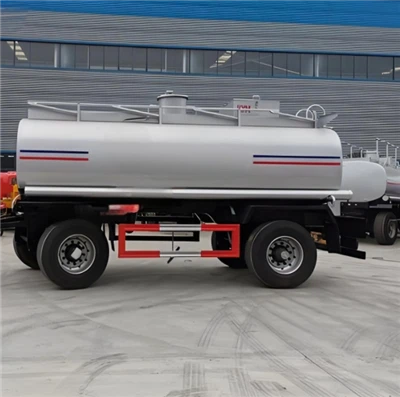
Hey there! I'm a supplier of fuel tank trailers, and today I'm gonna chat about the materials used to make these bad boys. Fuel tank trailers are super important for transporting all sorts of liquids, from gasoline to water and even liquefied natural gas (LNG) and compressed natural gas (CNG). So, let's dig into what goes into making them.
Steel
Steel is probably the most common material used in fuel tank trailers. It's strong, durable, and can handle a lot of wear and tear. There are different types of steel, but high - strength steel is often the go - to choice. It can withstand high pressures and is resistant to corrosion, especially when it's properly coated.
For gasoline transport trailers, steel is great because it can contain the volatile fuel safely. Gasoline is highly flammable, so the tank needs to be made of a material that won't rupture easily. Our [Gasoline Transport Trailer](/semi - trailer/tank - trailer/gasoline - transport - trailer.html) uses high - quality steel that meets all the safety standards. The steel walls are thick enough to prevent any leaks, and the joints are welded tightly to ensure maximum integrity.
Another advantage of steel is its malleability. It can be shaped into different forms, which is crucial for creating the various sizes and designs of fuel tank trailers. Whether it's a small trailer for local deliveries or a large one for long - haul transportation, steel can be customized to fit the requirements.
Aluminum
Aluminum is another popular material for fuel tank trailers. One of the biggest advantages of aluminum is its light weight. Compared to steel, aluminum tanks can significantly reduce the overall weight of the trailer. This means better fuel efficiency for the truck pulling the trailer, which is a huge plus for transportation companies.
Aluminum is also highly resistant to corrosion. It forms a thin oxide layer on its surface, which protects it from rust and other forms of degradation. This makes it a great choice for trailers that will be exposed to harsh environmental conditions, like those used for transporting water. Our [Water Tank Trailer](/semi - trailer/tank - trailer/water - tank - trailer.html) often uses aluminum because it can store water for long periods without getting damaged.
However, aluminum is not as strong as steel. So, for trailers that need to handle high - pressure liquids or heavy loads, a combination of aluminum and other materials might be used. For example, the frame of the trailer could be made of steel for strength, while the tank itself is made of aluminum for weight savings.
Stainless Steel
Stainless steel is a special type of steel that contains chromium, which gives it excellent corrosion resistance. It's often used for trailers that transport corrosive liquids, such as certain chemicals or food - grade products. Stainless steel doesn't rust, even when it comes into contact with acidic or alkaline substances.
In the case of LNG and CNG tank trailers, stainless steel is sometimes used because these gases can be quite reactive. Our [LNG CNG Tank Trailer](/semi - trailer/tank - trailer/lng - cng - tank - trailer.html) may use stainless steel in parts of the tank that are in direct contact with the gas. It ensures that the tank remains in good condition over a long period, reducing the risk of leaks and ensuring the safety of the transportation.

The smooth surface of stainless steel also makes it easy to clean, which is important for trailers that transport food - grade liquids. You don't want any residues left behind that could contaminate the next load.
Composite Materials
Composite materials are becoming more popular in the manufacturing of fuel tank trailers. These materials are made by combining two or more different materials to get the best properties of each. For example, a composite tank might combine a polymer resin with fibers like carbon or fiberglass.
Composite materials are lightweight, just like aluminum, but they can also have high strength. They are resistant to corrosion and can be designed to have specific mechanical properties. This means that they can be customized to meet the exact needs of different types of fuel tank trailers.
However, composite materials can be more expensive than traditional materials like steel and aluminum. But as the technology improves and production costs come down, we might see more and more fuel tank trailers made from composites in the future.
Insulation Materials
Insulation is an important part of fuel tank trailers, especially for those that transport cryogenic liquids like LNG. Insulation materials are used to keep the temperature of the liquid stable and prevent it from evaporating.
Common insulation materials include polyurethane foam and fiberglass. Polyurethane foam is a great insulator because it has a low thermal conductivity. It can be sprayed onto the tank to create a seamless layer of insulation. Fiberglass, on the other hand, is a lightweight and fire - resistant material. It can be wrapped around the tank to provide insulation.
Linings
Linings are used inside the fuel tanks to protect the tank material from the liquid being transported. For example, if a trailer is used to transport gasoline, a special lining can be applied to prevent the gasoline from corroding the steel or aluminum tank.
Epoxy linings are commonly used because they are resistant to chemicals and can form a strong bond with the tank material. They also provide a smooth surface, which reduces the risk of sediment buildup inside the tank.
Sealing Materials
Sealing materials are crucial for preventing leaks in fuel tank trailers. Gaskets and O - rings are commonly used to seal the joints and connections in the tank. These materials are made from rubber or other elastomers that can withstand the pressure and temperature of the liquid inside the tank.

Silicone rubber is a popular choice for sealing materials because it has good resistance to heat, chemicals, and aging. It can maintain its elasticity over a long period, ensuring a tight seal.
So, there you have it! These are the main materials used to make fuel tank trailers. Each material has its own advantages and disadvantages, and the choice of material depends on the type of liquid being transported, the design of the trailer, and the specific requirements of the customer.
If you're in the market for a fuel tank trailer, whether it's a [LNG CNG Tank Trailer](/semi - trailer/tank - trailer/lng - cng - tank - trailer.html), a [Water Tank Trailer](/semi - trailer/tank - trailer/water - tank - trailer.html), or a [Gasoline Transport Trailer](/semi - trailer/tank - trailer/gasoline - transport - trailer.html), we've got you covered. We use the best materials and the latest manufacturing techniques to ensure that our trailers are safe, reliable, and efficient. Don't hesitate to reach out for more information or to start a procurement discussion.
References
- ASME Boiler and Pressure Vessel Code
- DOT (Department of Transportation) regulations for hazardous materials transportation
- Industry standards for fuel tank trailer manufacturing