

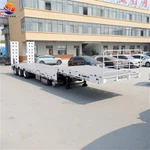


Refrigerated Semi Trailer With Side Door
A Refrigerated Semi Trailer with Side Door integrates a temperature-controlled cargo enclosure with an auxiliary side-access loading door engineered specifically for multi-stop urban and regional distribution. While standard rear doors accommodate traditional loading docks, the side door provides direct, localized access to selected cargo pallets without opening the main rear compartment, minimizing thermal loss during frequent transit stops.
A Refrigerated Semi Trailer with Side Door integrates a temperature-controlled cargo enclosure with an auxiliary side-access loading door engineered specifically for multi-stop urban and regional distribution. While standard rear doors accommodate traditional loading docks, the side door provides direct, localized access to selected cargo pallets without opening the main rear compartment, minimizing thermal loss during frequent transit stops.
Technical Specifications & Configuration Framework
|
Parameter Item |
Engineering Specification |
|
Vehicle Type |
Refrigerated Semi Trailer with Side Door |
|
Cargo Body Structure |
Insulated thermal composite sandwich panel construction |
|
Trailer Length |
Engineered to project requirements and road limits |
|
Overall Width |
Compliant with destination country road regulations |
|
Overall Height |
Optimized for regional fifth-wheel height and clearance |
|
Side Door Configuration |
Optional placement (Front-side, center-side, or multi-door) |
|
Rear Door Assembly |
Insulated multi-seal rear cargo door with heavy-duty hardware |
|
Refrigeration System |
Client-specified brand, model, and cooling capacity |
|
Temperature Range |
Configured for fresh or frozen cargo requirements |
|
Insulation System |
Optimized wall, roof, floor, and door thermal barriers |
|
Axles & Capacity |
Configured for targeted load ratings and regional regulations |
|
Suspension Type |
Air suspension or heavy-duty mechanical suspension |
|
Braking System |
ABS or EBS configuration with emergency relay valves |
|
Tires & Rims |
Commercial-grade load-rated tires matching operational duty |
|
Kingpin & Landing Gear |
Heavy-duty structure matched to target tractor interface |
|
Floor Construction |
Food-grade, reinforced, washable drainage flooring |
|
Payload Capacity |
Calculated accurately from completed vehicle tare weight |
Core Structural & Thermal Features
Side-Access Design for Multi-Drop Efficiency
The integrated side door introduces an additional entry point along the trailer body. For multi-drop distribution routes involving multiple retail or urban locations, drivers can access specific cargo pallets directly from the roadside, avoiding the inefficiency of opening the full rear enclosure.
• Positioning flexibility: Configured during the design phase based on customer unloading workflows.
• Access utility: Sized to accommodate hand pallet trucks, manual loading, and localized offloading.
Thermal Enclosure & Insulation Integrity
Refrigerated performance relies on a continuous thermal barrier rather than panel thickness alone.
• Composite Panels: Engineered to minimize thermal bridging and external heat transfer under high ambient temperatures.
• Insulated Floor: Built to withstand concentrated forklift and pallet-jack loads while isolating heat from the road surface.
• Door Sealing System: Multi-layer compression gaskets maintain continuous pressure around both rear and side doors to prevent air leakage.
Refrigeration System Matching
The refrigeration unit must match the body volume, insulation value, and duty cycle. Proper selection accounts for:
Ambient operating temperatures and solar heat load.
Target internal holding temperatures (fresh vs. frozen).
Door-opening frequency during multi-drop distribution.
Required pulldown and recovery times.
Chassis and Running Gear Engineering
The insulated body is mounted on a high-strength steel semi-trailer chassis designed to absorb dynamic road stresses.
• Main Beams: High-yield structural steel with precision cross-member alignment.
• Axles & Brakes: Configured for local axle-load limits and highway safety standards.
• Electrical Harness: Weather-sealed harnesses complying with regional lighting and connection standards.
Typical Applications
Supermarket Distribution: Rapid delivery of perishable goods to multiple retail locations in urban environments.
Food & Beverage Logistics: Transport of fresh produce, meat, seafood, dairy, and processed foods.
Multi-Drop Cold Chain: Routes requiring partial cargo offloading without exposing the entire payload to ambient conditions.
Regional Transport: Long-distance hauling where flexible loading configurations improve turnaround times.
Regulatory Compliance & Manufacturing Standards
To ensure seamless registration and operation in export markets, manufacturing and compliance adhere to strict criteria:
Dimensional & Weight Compliance: Trailers are engineered within local highway legal limits for overall length, width, height, and axle-load distribution.
Braking & Safety Standards: Integration of market-compliant braking systems (ABS/EBS) and high-visibility LED lighting harnesses.
Thermal Validation: Post-production inspection covering panel bonding integrity, door-seal compression testing, and frame squareness measurements.
How to Select the Right Configuration
Define Cargo Parameters: Identify cargo types, packaging, pallet dimensions, average weight, maximum weight, and exact temperature setpoints.
Analyze Delivery Patterns: Determine whether operations involve point-to-point warehouse transport or frequent multi-stop urban delivery.
Specify Thermal & Refrigeration Limits: Provide target holding temperatures, local ambient extremes, and expected door-opening frequencies.
Confirm Regulatory Compliance: Verify local axle-load limits, maximum vehicle dimensions, braking requirements, and road certification standards.
Calculate Net Payload: Evaluate the final tare weight of the completed trailer configuration against local gross weight limits.
Frequently Asked Questions
Q: What is the primary advantage of a side door on a refrigerated semi trailer?
A: It provides direct access to cargo during multi-stop distribution, allowing operators to unload specific items without opening the main rear doors.
Q: Does a side door compromise cooling performance?
A: When engineered with reinforced frames and multi-layer compression seals, thermal loss is minimized and balanced with the specified refrigeration unit.
Q: Can the side-door position be customized?
A: Yes. Side-door placement and dimensions can be configured according to your cargo layout, pallet sizes, and unloading processes.
Q: How do I choose the right refrigeration unit?
A: Selection is based on cargo volume, required internal temperature, local ambient temperatures, and door-opening frequency during delivery routes.
Q: Can this trailer handle frozen cargo?
A: Yes, provided the insulation thickness, floor construction, and refrigeration unit capacity are specified for frozen-grade operating cycles.
Q: What information is needed to request an accurate quotation?
A: Provide your destination market, required trailer length, internal volume, payload limits, target temperature range, side-door requirements, and preferred refrigeration brand.
Hot Tags: refrigerated semi trailer with side door, China refrigerated semi trailer with side door manufacturers, industrial semi trailer, semi trailer durability, semi trailer financing, semi trailer hauling, semi trailer journey, semi trailer service
Previous
No InformationYou Might Also Like


Send Inquiry