

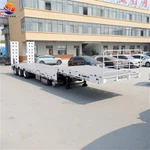


Meat Hanging Refrigerated Semi Trailer
Unlike standard palletized refrigerated trailers, this configuration integrates a heavy-duty overhead meat rail system directly into the roof structure. It combines high-density thermal insulation, precise refrigeration control, reinforced load-bearing frames, and customizable hanging layouts to maintain strict hygiene, structural stability, and cold-chain compliance.
The Meat Hanging Refrigerated Semi Trailer is engineered specifically for the temperature-controlled transport of slaughtered meat and whole carcasses that must remain suspended during transit.
Unlike standard palletized refrigerated trailers, this configuration integrates a heavy-duty overhead meat rail system directly into the roof structure. It combines high-density thermal insulation, precise refrigeration control, reinforced load-bearing frames, and customizable hanging layouts to maintain strict hygiene, structural stability, and cold-chain compliance.
Key Technical Specifications
|
Specification Parameter |
Standard Configuration Details |
|
Trailer Type |
Meat Hanging Refrigerated Semi Trailer |
|
Configuration |
Tri-axle refrigerated box trailer |
|
Dimensions |
Approx. 13,600 × 2,600 × 4,000 mm (Customizable) |
|
Cargo Body |
Refrigerated insulated box structure |
|
Body Panels |
FRP (Fiberglass Reinforced Polymer) panels with polyurethane core |
|
Insulation Thickness |
Approx. 80 mm (Thermal performance adjusted to operating climate) |
|
Temperature Range |
Approx. -30°C to +30°C (Adjustable via front-mounted refrigeration unit) |
|
Refrigeration Unit |
Front-mounted commercial refrigeration system |
|
Chassis Framework |
High-strength Q345 structural steel |
|
Axles & Suspension |
3 axles; Mechanical or air suspension configuration |
|
Braking System |
Pneumatic braking system with ABS/EBS options |
|
Rear Doors |
Double swing doors with multi-layer perimeter rubber seals |
|
Floor Construction |
Reinforced aluminum tread-plate floor with integrated drainage channels |
|
Electrical System |
24V DC lighting and signaling system |
|
Kingpin & Landing Gear |
Standard 2-inch kingpin; Heavy-duty two-speed landing legs |
|
Tires |
12R22.5 tubeless commercial tires |
|
Meat Hanging System |
Overhead rail network, customized layout and load capacity |
Structural Engineering & Manufacturing Features
Insulated Body & Sanitation Design
The cargo body utilizes composite panel manufacturing to minimize thermal bridging and heat ingress.
• Thermal Performance: Continuous polyurethane core enclosed by high-strength FRP skins (approx. 80 mm thickness) limits heat transfer during long-distance transits.
• Hygienic Interior: Seamless interior surfaces resist chemical cleaning agents, high-pressure washing, and routine sanitation procedures required in meat logistics.
• Drainage Integration: Sloped floor designs integrated with drainage grooves prevent fluid accumulation during daily washdown operations.
Overhead Meat Rail System & Roof Reinforcement
The overhead rail network is the core differentiator from standard reefer units.
• Load Path Distribution: Rails are tied directly into internal steel roof reinforcements embedded within the ceiling structure, rather than bolted onto finished panels.
• Layout Flexibility: Configurations support straight runs, multi-lane longitudinal tracks, or custom junction points matching slaughterhouse loading bays.
• Dynamic Stress Resistance: Corrosion-resistant hanging rails and brackets are engineered to absorb dynamic forces during vehicle acceleration, braking, and cornering.
Refrigeration & Airflow Dynamics
Hanging carcasses create vertical barriers that alter internal airflow compared to uniform pallet stacks.
• Evaporator Positioning: Positioned to maintain unobstructed cold-air return paths across upper and lower carcass zones.
• Temperature Stability: Continuous airflow circulation prevents hot spots, ensuring uniform temperature distribution from -30°C to +30°C for chilled or frozen product lines.
Chassis and Weight Distribution
The combined weight of insulated panels, refrigeration equipment, overhead rails, and hanging loads requires rigorous weight distribution analysis.
• Frame Strength: Constructed from high-strength Q345 steel to resist torsional flexing under heavy dynamic loads.
• Axle Load Balance: Suspensions and axle spacings are calculated based on maximum allowable gross vehicle weight (GVW) and regional bridge laws.
Manufacturing & Quality Inspection Standards
To ensure structural reliability and thermal performance under demanding operating conditions, every trailer undergoes rigorous manufacturing checks:
Chassis Load Testing: Frame alignment, structural welding integrity, and kingpin positioning inspections.
Thermal Chamber / Seal Testing: Door seal compression tests and insulation continuity checks to verify thermal efficiency.
Rail Static Load Verification: Load-bearing tests on overhead rail brackets and roof reinforcement assemblies.
Water Leakage Testing: High-pressure spray testing on body seams, roof joints, and rear-door seals prior to delivery.
Maintenance & Operating Best Practices
Rail and Roller Lubrication: Regularly inspect and lubricate overhead meat hooks, rollers, and track joints with food-grade lubricants to ensure smooth sliding and prevent premature wear.
Drainage Channel Maintenance: Flush and clear integrated floor drainage channels weekly to prevent blood or fat residue buildup and maintain optimal hygiene standards.
Door Seal Inspection: Check perimeter rubber gaskets monthly for cracks, hardening, or compression loss to maintain airtight thermal integrity.
Refrigeration Unit Servicing: Schedule routine maintenance checks for the front-mounted refrigeration system, including refrigerant level checks, filter cleanings, and electrical terminal inspections.
FAQ
Q: Can this trailer be used for palletized cargo instead of hanging meat?
A: Yes. The trailer platform can accommodate standard floor loading or combined setups if specified during the engineering phase, though the primary structural design is optimized for overhead rail systems.
Q: Can the internal hanging rail layout be customized?
A: Yes. Rail heights, track separation distances, longitudinal layouts, and structural bracket placements are engineered to match specific loading dock interfaces and carcass dimensions.
Q: How is condensation managed during high-frequency door openings?
A: The combination of multi-layer door seals, high-efficiency thermal insulation, and optimized evaporator airflow helps stabilize internal temperature recovery after door openings.
Q: What documentation is provided for road registration?
A: Engineering drawings, material certificates, axle test reports, and compliance documentation can be tailored to meet destination-market regulatory frameworks.
Hot Tags: meat hanging refrigerated semi trailer, China meat hanging refrigerated semi trailer manufacturers, semi trailer branding, semi trailer evaluation, semi trailer market, semi trailer mechanics, semi trailer resource, semi trailer serial number
You Might Also Like


Send Inquiry