

As a seasoned supplier of cement mixer trucks, I've witnessed firsthand the critical role these vehicles play in the construction industry. The efficiency of a construction project often hinges on the proper loading and unloading of cement mixer trucks. In this blog, I'll delve into the different loading and unloading methods for various types of cement mixer trucks, providing valuable insights for construction professionals and anyone interested in the field.
Loading Methods
Dry Batching Loading
Dry batching is a common loading method where cement, aggregates (such as sand and gravel), and water are loaded separately into the mixer drum. This method offers several advantages. Firstly, it allows for precise control over the mix proportions. Construction teams can adjust the amount of each component according to the specific requirements of the project. For example, in a project that demands high - strength concrete, more cement can be added.
The process begins with loading the aggregates into the mixer drum. The aggregates are usually transported to the loading site in trucks or conveyor belts. Once the aggregates are in the drum, cement is added. Cement is typically stored in silos and transferred to the mixer using pneumatic systems or screw conveyors. Finally, water is added in the appropriate amount. The mixer then rotates to blend all the components thoroughly.
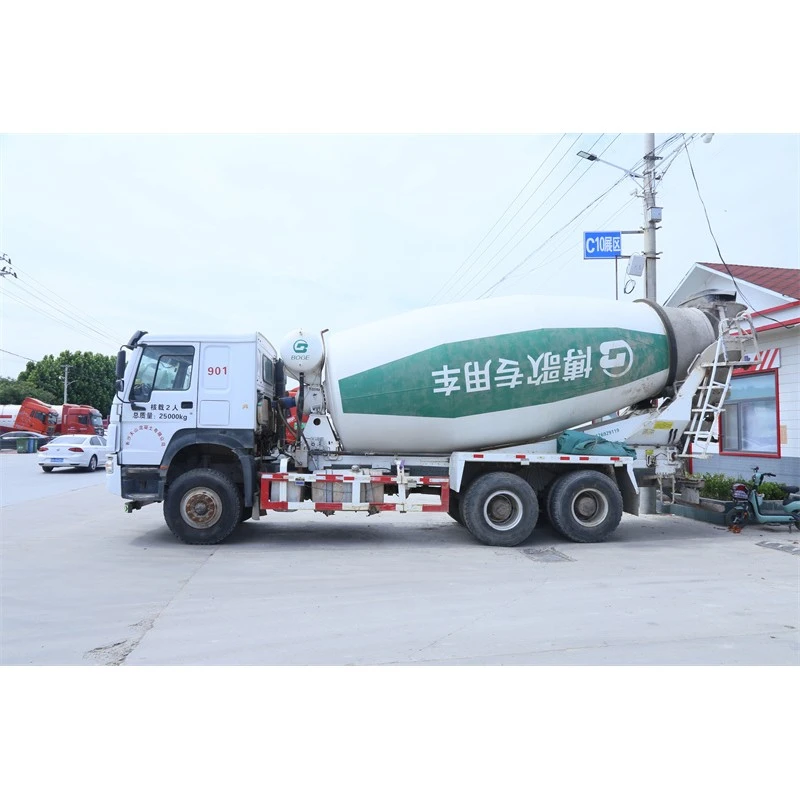
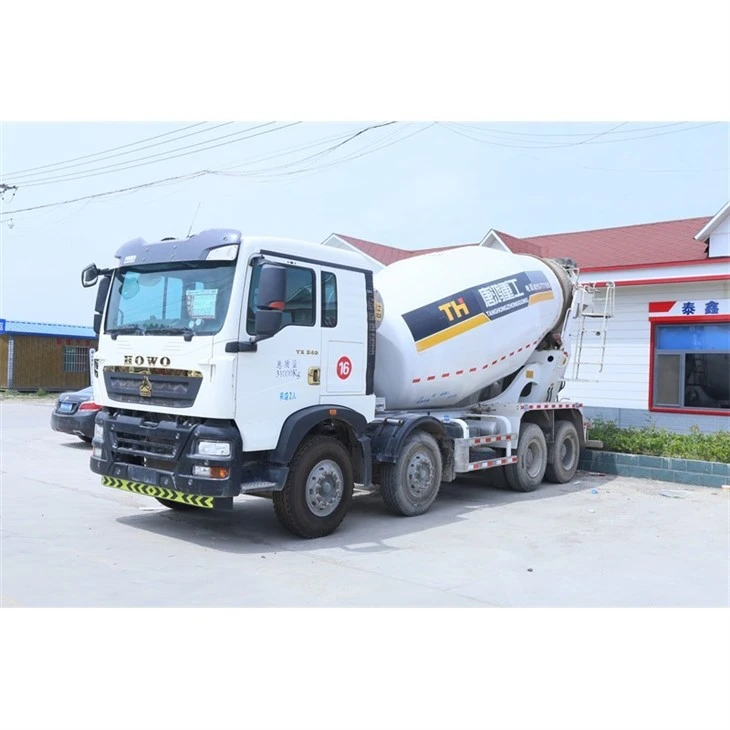
One of the drawbacks of dry batching is that it requires more equipment and time compared to other methods. However, for large - scale projects where quality control is of utmost importance, the benefits outweigh the drawbacks. Many of our Howo Cement Mixer Truck models are well - suited for dry batching due to their large drum capacities and efficient mixing mechanisms.
Wet Batching Loading
Wet batching, on the other hand, involves pre - mixing the cement, aggregates, and water at a central batching plant. The pre - mixed concrete is then transported to the construction site in the mixer truck. This method is faster and more convenient as the mixing process is completed before loading.
The pre - mixed concrete is pumped into the mixer drum using a concrete pump. The pump can transfer the concrete quickly and efficiently, reducing the loading time. Wet batching is ideal for projects where time is a critical factor, such as road construction or small - scale building projects. Our 6m3 Cement Mixer Truck is often used for wet batching applications, as its size is suitable for transporting pre - mixed concrete to various job sites.
However, wet batching has its limitations. The quality of the concrete can be affected if there are delays in transportation. The concrete may start to set during transit, especially in hot weather, which can lead to a reduction in its workability and strength.
Unloading Methods
Gravity Unloading
Gravity unloading is the simplest and most common method of unloading cement mixer trucks. It relies on the force of gravity to discharge the concrete from the mixer drum. The truck is positioned at the desired location, and the drum is tilted to allow the concrete to flow out through the discharge chute.
This method is suitable for unloading concrete at ground level or into shallow forms. It is quick and requires minimal equipment. However, it has limitations. The discharge rate is relatively slow, and it may not be suitable for unloading concrete at higher elevations or in confined spaces.
Pump Unloading
Pump unloading is a more advanced method that uses a concrete pump to transfer the concrete from the mixer drum to the desired location. There are two main types of concrete pumps: boom pumps and line pumps.
Boom pumps are equipped with a hydraulic arm (boom) that can be extended and maneuvered to reach different areas. They are ideal for large - scale projects where concrete needs to be placed at high elevations or over long distances. For example, in high - rise building construction, boom pumps can easily reach the upper floors.
Line pumps, on the other hand, use a series of pipes to transport the concrete. They are more flexible and can be used in confined spaces or for projects where the concrete needs to be placed in specific areas. Pump unloading is faster and more precise than gravity unloading, but it requires more equipment and skilled operators.
Auger Unloading
Auger unloading is a method that uses an auger (a rotating screw - like device) to discharge the concrete from the mixer drum. The auger is located inside the drum and rotates to push the concrete out through the discharge chute.
This method is suitable for unloading concrete with a high slump (more fluid concrete). It provides a more controlled discharge rate compared to gravity unloading and can be used in situations where a more precise placement of concrete is required. However, auger unloading systems can be more complex and require regular maintenance.
Considerations for Different Types of Projects
Small - Scale Residential Projects
For small - scale residential projects, such as building a single - family home or a small garage, wet batching loading and gravity unloading are often the most practical options. The relatively small volume of concrete required can be easily pre - mixed at a local batching plant and transported in a 6m3 Cement Mixer Truck. Gravity unloading is sufficient for placing the concrete at ground level or in shallow foundations.
Large - Scale Commercial Projects
Large - scale commercial projects, such as high - rise buildings or large industrial complexes, demand more sophisticated loading and unloading methods. Dry batching loading is preferred to ensure precise control over the concrete mix. Pump unloading, especially using boom pumps, is essential for reaching high elevations and covering large areas quickly. Our Howo Cement Mixer Truck models, with their large capacities and compatibility with various unloading systems, are well - suited for these types of projects.
Road Construction Projects
Road construction projects require a continuous supply of concrete. Wet batching loading is commonly used to ensure a steady flow of pre - mixed concrete. Pump unloading or auger unloading can be used to place the concrete accurately on the road surface. The ability to unload the concrete quickly and precisely is crucial for maintaining the construction schedule.
Conclusion
Understanding the different loading and unloading methods for cement mixer trucks is essential for optimizing construction processes. Whether it's a small - scale residential project or a large - scale commercial endeavor, choosing the right method can significantly impact the quality, efficiency, and cost of the project.
As a supplier of cement mixer trucks, we are committed to providing high - quality vehicles that are compatible with various loading and unloading methods. Our Howo Cement Mixer Truck and 6m3 Cement Mixer Truck models are designed to meet the diverse needs of the construction industry.
If you're in the market for a cement mixer truck or need more information about loading and unloading methods, we invite you to contact us for a detailed discussion. Our team of experts is ready to assist you in finding the best solution for your construction projects.
References
- "Concrete Construction Handbook" by Edward G. Nawy
- "Cement Mixer Truck Operations and Maintenance Manuals" from leading manufacturers


