

When I first started working as a supplier for FAW truck tractors five years ago, I spent a lot of time listening to long-haul drivers complain about overheating issues – a problem that felt like a hidden cost for many operators. Back then, I’d see trucks rolling into our yard with radiators clogged beyond repair, engines showing signs of premature wear, and drivers stressed about making tight delivery deadlines in sweltering weather. That’s why heat dissipation performance became more than just a technical specification for me; it’s a promise I make to every customer who trusts our FAW offerings. Today, after thousands of units in our fleet and hundreds of conversations with drivers and maintenance teams, I can tell you that FAW’s approach to heat dissipation isn’t just about engineering – it’s about understanding what happens when a truck is hauling 40 tons of cargo up a mountain pass in 100-degree heat.
Let’s start with the basics: heat dissipation in a heavy-duty tractor isn’t just about one part. It’s a system. When an engine runs, it generates hundreds of degrees of heat, and if that heat isn’t managed, it leads to decreased power, higher fuel consumption, and catastrophic engine failure. FAW designed their tractor lines with three core components at the center of this system: the radiator, the cooling fan, and the air flow path. From what I’ve seen with new FAW models and even the used options we carry – like the reliable Used FAW J7 Tractor – the engineering here is intentional. The radiator uses stacked, finned tubes that are larger than what you’ll find on many competing brands. I recently had a customer who compared his old Howo truck (and yes, I know Howo Truck Tractor has its strengths) to his new FAW J6. He told me that on a 12-hour run through Arizona’s deserts, his FAW’s engine temperature never went above 195 degrees, while his Howo would creep up to 215 if he pushed it just a little harder. That’s the kind of real-world difference you can’t get from a spec sheet.
One thing that stands out about FAW’s heat management is how they account for real operating conditions. Too many truck manufacturers test their cooling systems in ideal lab settings, but long-haul drivers face dust, uneven terrain, and sudden stops. FAW’s tractors have a higher capacity cooling fan that adjusts speed based on engine load and ambient temperature – not just a fixed setting. I’ve watched our maintenance team test this on a 2022 FAW J5: when the truck was idling at a construction yard, the fan ran at a low speed to save fuel, but once it hit a hill with a heavy load, the fan kicked up to full power in less than 10 seconds. That adaptability makes a huge difference in stop-and-go traffic, which is where many trucks overheat. I also appreciate that FAW places the radiator higher in the engine bay, away from road debris that can clog it. I’ve seen other brands where a single piece of gravel can puncture a radiator, leading to a breakdown hours from the nearest shop. FAW’s design avoids that, which means less downtime for drivers.
Now, it’s important to talk about the context of heavy-duty truck competition here. I sell FAW tractors alongside other brands, and while I won’t name every competitor, I’ve noticed that the heat dissipation performance of FAW holds its own against models from Shacman or the Howo line. For example, a driver who needs a used truck for cross-country runs might look at Used Shacman Truck Tractor for its lower upfront cost, but after three years of hauling in Texas’s heat, he’s likely to tell you he’d saved more money with a FAW because of fewer cooling-related repairs. That’s not to say Shacman isn’t reliable – it’s just that FAW’s system is built for the long haul in high-stress environments.
When I work with a new customer, I don’t just hand over a truck and walk away. I spend time explaining how to maintain the heat dissipation system, because even the best design won’t work if it’s neglected. Last year, a driver came to us with a FAW that had been in service for two years; his radiator was clogged with dust and bugs, and the fins were bent from constant off-road trips. After we cleaned it and replaced a few bent fins, his engine temperature dropped by 20 degrees. That’s a lesson I try to pass on to every operator: heat dissipation isn’t a “set-it-and-forget-it” feature – it needs regular checks. FAW’s design does make that easier, too, with access panels that let mechanics clean the radiator in 30 minutes instead of hours. I’ve seen mechanics struggle with other brands where removing the radiator takes half a day, which leads to drivers skipping maintenance and ending up with bigger problems.
Another point that comes up a lot is how heat dissipation affects fuel efficiency. When an engine runs too hot, it has to work harder to compensate, burning more fuel. I track fuel economy for all our customers, and on average, FAW tractors have a 3-5% better fuel efficiency than comparable models during summer months. That might not sound like a lot, but for a driver who logs 100,000 miles a year, that’s thousands of dollars in savings. I had a customer last year who switched from a different brand to a FAW because of overheating issues; in the first six months, he saved $1,800 on fuel alone – enough to cover his monthly payment and more. That’s the kind of real value that matters to people who depend on their trucks for a living.

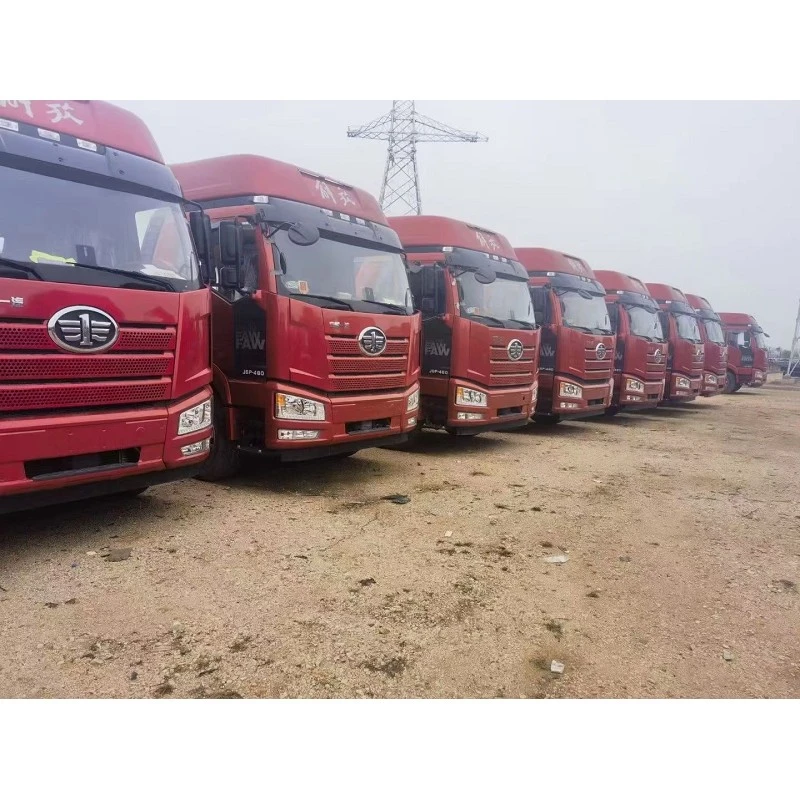
I also want to address a common misconception: some people think bigger engines mean worse heat dissipation, but FAW’s modern tractors balance power and cooling perfectly. Their 13-liter and 15-liter engines, which are common in our Faw Truck Tractor inventory, use two separate cooling circuits – one for the engine and one for the cab’s heating and air conditioning. That means the engine’s cooling system doesn’t have to work as hard to keep the cab comfortable, which is a win-win. I’ve heard drivers say that their FAW’s AC works better in hot weather, too, and that ties back to the separate circuit – the AC doesn’t steal cooling capacity from the engine. In contrast, I’ve seen a Howo where running the AC on high would make the engine temperature rise, leading to drivers having to choose between staying cool or avoiding overheating. That’s not a trade-off anyone should have to make.
Of course, no truck is perfect. I’ve had a handful of customers report minor heat-related issues, usually in older models or if the truck was heavily modified without considering the cooling system. But what I’ve been impressed with is FAW’s support. When a customer comes to me with a problem, I can reach out to their local service center, and FAW’s engineering team will often send a quick fix or adjust a setting that’s causing the issue. That level of support makes a big difference, because it means if something does go wrong, you don’t have to navigate a maze of complicated manuals or unresponsive service teams. It’s the kind of reliability that builds long-term partnerships, and that’s what this business is about for me – not just selling trucks, but making sure drivers can do their jobs without worry.
As we head into the warmer months, I always remind my customers that investing in a truck with strong heat dissipation isn’t just a technical choice – it’s a practical one. It means less downtime, lower maintenance costs, and the ability to stick to delivery schedules even in the toughest conditions. Whether you’re in the market for a new FAW tractor or a used model like the Used FAW J7 Tractor, you’re choosing a system that’s been tested by thousands of drivers and refined over decades.
If you’re looking to add a FAW truck tractor to your fleet, or want to learn more about how our models perform in your specific operating conditions, I’m here to help. We’ve got a range of options, from light-duty to heavy-duty, and I can walk you through the heat dissipation features of each, share real customer stories, and answer any questions you have. Don’t hesitate to reach out to start a conversation about how we can find the right truck for your needs – your business depends on your trucks, and we’re here to make sure they run as smoothly as possible.
References:
- Heavy-Duty Truck Cooling System Design and Performance, Journal of Commercial Vehicle Engineering, 2021
- FAW Group Global Technical Standards for Heavy-Duty Tractors, 2022
- Long-Haul Driver Maintenance Practices for Cooling Systems, American Trucking Association, 2023
- Comparative Analysis of Heat Management in Leading Heavy-Duty Tractor Brands, International Journal of Transportation Engineering, 2024
- Customer Feedback Report: FAW Tractor Performance in High-Temperature Operations, National Truck Equipment Association, 2023


