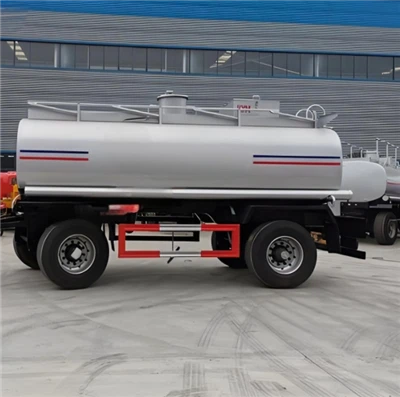
Hey there! I'm working with a fuel tank trailer supplier, and I've seen firsthand how crucial it is for fuel tank trailer drivers to get proper training. In this blog, I'll break down the requirements for their training.
Basic Requirements
First off, a driver needs to have a valid commercial driver's license (CDL). This is like the golden ticket for driving big rigs on the road. It shows that the driver has the basic skills to handle large vehicles. But getting a CDL isn't a walk - in - the - park. You've got to pass both a written test and a skills test. The written test covers things like traffic rules, vehicle safety, and basic driving knowledge. The skills test, on the other hand, is all about showing that you can actually drive the vehicle safely.
Another important basic requirement is a clean driving record. No one wants a driver with a long list of traffic violations behind the wheel of a fuel tank trailer. Insurance companies won't like it, and it's just plain dangerous. A clean record means fewer chances of getting into accidents, which is super important when you're transporting fuel.
Physical Fitness
Driving a fuel tank trailer is no easy job. It requires a good level of physical fitness. Drivers need to be able to sit for long hours without getting too tired. They also need to have good eyesight and hearing. Imagine if a driver can't see a stop sign or hear a warning signal because of poor eyesight or hearing. That could lead to a serious accident.
Regular medical check - ups are a must. These check - ups make sure that the driver is in good health and fit to drive. Conditions like high blood pressure, diabetes, or heart problems can affect a driver's ability to focus and react quickly on the road. So, staying in good physical shape is a key part of the training requirements.
Specialized Training
Now, let's talk about the specialized training that fuel tank trailer drivers need. This training is focused on the unique aspects of driving a fuel tank trailer.
Hazardous Materials Training
Fuel is a hazardous material. That means drivers need to know how to handle it safely. They have to understand the risks associated with transporting fuel, like the risk of fire and explosion. Hazardous materials training covers things like proper loading and unloading procedures. For example, when loading fuel into the tank, the driver needs to make sure that the connections are secure and there are no leaks.
They also learn about emergency response in case of a spill or an accident. Knowing how to contain a fuel spill quickly can prevent a small problem from turning into a big environmental disaster. This training is usually certified by the relevant authorities, and drivers need to keep their certification up - to - date.
Tanker - Specific Training
Driving a fuel tank trailer is different from driving a regular truck. The weight distribution is different, and the tank can slosh around, affecting the vehicle's stability. Tanker - specific training teaches drivers how to handle these unique challenges.
For instance, drivers learn how to make turns safely. When turning, the sloshing fuel can cause the trailer to tip over if the driver doesn't take the turn at the right speed and angle. They also learn about the importance of maintaining a safe following distance. Since fuel tank trailers are heavier and take longer to stop, a safe following distance gives the driver more time to react in case of an emergency.


Safety Procedures
Safety is the number one priority when it comes to fuel tank trailer driving. Drivers need to be well - versed in safety procedures.
Pre - Trip Inspections
Before hitting the road, drivers must conduct a thorough pre - trip inspection of the fuel tank trailer. This includes checking the tires for proper inflation and wear, inspecting the brakes to make sure they're working correctly, and looking for any signs of damage to the tank. A small problem like a leaky valve or a worn - out tire can turn into a big issue on the road.
On - Road Safety
On the road, drivers need to follow all traffic rules and safety guidelines. They should always drive at a safe speed, especially when the roads are wet or slippery. Using turn signals, checking blind spots, and maintaining a proper following distance are all part of on - road safety.
Post - Trip Inspections
After a trip, drivers also need to do a post - trip inspection. This helps to identify any problems that may have occurred during the journey. It's important to catch these problems early so that they can be fixed before the next trip.
Regulatory Compliance
Fuel tank trailer drivers need to comply with a whole bunch of regulations. These regulations are in place to ensure the safety of everyone on the road and to protect the environment.
Federal and State Regulations
There are both federal and state regulations that drivers need to follow. Federal regulations set the minimum standards for things like driver training, vehicle safety, and hazardous materials transportation. State regulations can sometimes be more strict, so drivers need to be aware of the rules in the states they're driving through.
Industry Standards
In addition to government regulations, there are also industry standards. These standards are set by organizations like the American Petroleum Institute (API). They cover things like the design and construction of fuel tank trailers, as well as the training and certification of drivers.
Continuing Education
The world of fuel tank trailer driving is always changing. New technologies are being developed, and regulations are constantly being updated. That's why continuing education is so important for drivers.
Drivers should participate in regular training courses to stay up - to - date with the latest safety procedures, regulations, and industry trends. This could include online courses, in - person workshops, or seminars.
Our Products
As a fuel tank trailer supplier, we offer a wide range of high - quality products. Check out our Full Oil Tank Trailer, which is designed for efficient and safe fuel transportation. We also have the 30 - 50 Cubic Meter Bulk Cement Transport Tanker Powder Material Storage Transport Tank Semi Trailer for those who need to transport bulk cement. And if you're looking for a smaller option, our 20CBM Fuel Tank Truck might be just what you need.
If you're interested in our products or have any questions about fuel tank trailer training, feel free to reach out. We're here to help you make the best choices for your business.
References
- Federal Motor Carrier Safety Administration (FMCSA)
- American Petroleum Institute (API)
- Department of Transportation (DOT) regulations