Introduction
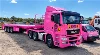
The transportation of goods is a crucial aspect of the economy. The movement of goods from one place to another is facilitated by various means of transport, including land, air, and sea transport. One of the most widely-used means of land transport is the semi-trailer. A semi-trailer, also referred to as a semi, tractor-trailer, or articulated truck, is a vehicle consisting of a tractor unit and a trailer unit.
Brief history
The concept of semi-trailers was first implemented in the early 20th century. The first semi-trailer was invented in 1914 by Fruehauf Trailer Corporation. The invention of the semi-trailer revolutionized the transportation industry, as it allowed for the transportation of larger quantities of goods over long distances. Today, semi-trailers are widely used around the world and have become an essential component of the global economy.
Types of semi-trailers
There are several types of semi-trailers, each designed to meet specific transportation needs. Some of the most common types of semi-trailers include:
1. Dry van semi-trailers: Dry van semi-trailers are the most common type of semi-trailer. They are enclosed trailers used for the transportation of dry goods, including packaged goods, electronics, and clothing, among others.
2. Reefer semi-trailers: Reefer semi-trailers, also known as refrigerated semi-trailers, are used for transporting perishable goods such as food and pharmaceuticals. They are equipped with refrigeration units that maintain a specific temperature inside the trailer.
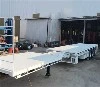
3. Flatbed semi-trailers: Flatbed semi-trailers are open trailers used for transporting bulky items, including construction materials, machinery, and vehicles.
4. Tanker semi-trailers: Tanker semi-trailers are used for transporting liquid or gas products such as petroleum, chemicals, and food-grade products.
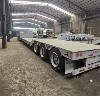
5. Lowboy semi-trailers: Lowboy semi-trailers are used for transporting heavy equipment, including construction machinery, forestry equipment, and military vehicles.
Components of a semi-trailer
A semi-trailer consists of several key components, including:
1. Tractor unit: The tractor unit is the front part of the semi-trailer that houses the engine, cab, and steering mechanism.
2. Trailer unit: The trailer unit is the rear part of the semi-trailer that is attached to the tractor unit. It consists of the trailer bed, wheels, and axles.
3. Landing gear: The landing gear is a set of wheels that support the front part of the trailer unit when it is detached from the tractor unit.
4. Kingpin: The kingpin is a cylindrical steel pin that connects the tractor unit to the trailer unit. It is inserted into the coupling mechanism on the tractor unit.
5. Fifth wheel: The fifth wheel is a horseshoe-shaped component that is mounted on the back of the tractor unit. It is used to connect the kingpin on the trailer unit to the tractor unit.
6. Axles: The axles are the components that connect the wheel hubs to the trailer unit. They are responsible for supporting the weight of the trailer and its cargo.
7. Suspension: The suspension system is responsible for damping the shock and vibration generated by the movement of the semi-trailer.
Regulations governing semi-trailers
Semi-trailers are subject to various regulations governing their design, construction, and operation. These regulations are put in place to ensure the safety of drivers, other road users, and the general public. Some of the regulations governing semi-trailers include:
1. Maximum length: A semi-trailer must not exceed a maximum length of 53 feet and 6 inches.
2. Maximum weight: The maximum weight of a semi-trailer varies depending on the weight restrictions put in place by the state or country.
3. Height restrictions: There are height restrictions in place for semi-trailers to ensure that they do not cause damage to overhead structures such as bridges.
4. Safety equipment: Semi-trailers must be equipped with safety features such as emergency brakes, reflectors, and lights.
5. Driver qualifications: Drivers of semi-trailers must have a commercial driver''s license and meet specific qualifications set by the government.
Advantages and disadvantages of semi-trailers
Semi-trailers offer several advantages for the transportation of goods. Some of the advantages include:
1. Efficiency: Semi-trailers are efficient when it comes to the transportation of large quantities of goods over long distances.
2. Flexibility: Semi-trailers can be used to transport various types of goods, including dry goods, perishable goods, and heavy equipment.
3. Accessibility: Semi-trailers are accessible and can reach remote areas that may be difficult to access using other means of transport.
4. Cost-effective: The use of semi-trailers for the transportation of goods is cost-effective when compared to other modes of transport.
Despite the advantages, semi-trailers also have some disadvantages. One of the major disadvantages is the high cost of maintenance. Semi-trailers require regular maintenance to ensure that they are in good working condition, and this can be expensive.
Conclusion
Semi-trailers play a vital role in the transportation industry. They offer a flexible, efficient, cost-effective means of transporting goods over long distances. Manufacturers continue to innovate and improve the design and construction of semi-trailers to improve their performance and maximize their benefits. As the global economy continues to grow, the use of semi-trailers is expected to increase, making them an essential component of modern transportation.