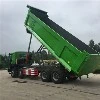
What is the difference between a farm tractor and a truck tractor? This is a question that is commonly asked by people who are interested in agriculture, transportation, and heavy machinery. While both types of tractors share some similarities, they are designed for different purposes and have distinct features that set them apart. In this article, we will explore the differences between farm tractors and truck tractors in detail, examining factors such as their size, power, attachments, and functions.
**Size
One of the most obvious differences between farm tractors and truck tractors is their size. Farm tractors are typically smaller and more compact than truck tractors, as they are designed to be used in agricultural applications and do not need to traverse highways and urban areas. Farm tractors typically measure between 15 and 20 feet long and between 6 and 8 feet wide. They are also generally no more than 10 feet tall, which makes them well-suited for use in spaces with low ceilings and tight corners.
Truck tractors, on the other hand, are much larger and more substantial than farm tractors, as they are designed to haul heavy loads over long distances. Truck tractors can range in length from 20 to 30 feet and can be as much as 9 feet wide. They are also much taller than farm tractors, with an average height of 13 feet, which allows them to navigate overpasses and bridges with ease.
**Power
Another major difference between farm tractors and truck tractors is their power, which is determined by the size of their engines. Farm tractors typically have much smaller engines than truck tractors, as they do not need to move large loads over long distances. The engines of farm tractors typically range from 25 to 100 horsepower, with the most common being around 50 horsepower.
Truck tractors, on the other hand, are powered by much larger engines, which allow them to traverse long distances with heavy loads. The engines of truck tractors can range from 300 to 600 horsepower, with the most common being around 400 to 450 horsepower. This extra power is necessary to enable the truck tractor to pull trailers weighing up to 80,000 pounds.
**Attachments
Farm tractors and truck tractors also differ in the attachments they use, which are designed to enable them to carry out different functions. Farm tractors are typically equipped with attachments such as plows, cultivators, seeders, and harvesters, which enable them to perform tasks such as tilling fields, planting crops, and harvesting produce. These attachments are designed to be easily attachable and detachable, allowing farmers to quickly switch between different tasks.
Truck tractors, on the other hand, are equipped with attachments designed to enable them to tow heavy trailers over long distances. These attachments include fifth wheel hitches, which connect the trailer to the truck tractor, and air brakes, which allow the driver to slow and stop the trailer as needed. Some truck tractors are also equipped with specialized attachments, such as refrigerated trailers designed to transport perishable goods.
**Functions
Farm tractors and truck tractors also differ in the functions they perform. Farm tractors are designed to carry out a broad range of tasks related to agriculture, including tilling soil, planting crops, and harvesting produce. They are also commonly used to perform general maintenance tasks, such as plowing snow, fixing fences, and mowing grass.
Truck tractors, on the other hand, are primarily used to transport goods over long distances. They are most commonly used to haul heavy cargo such as building materials, consumer goods, and industrial equipment. They are also commonly used to transport refrigerated goods, hazardous materials, and livestock.
**Conclusion
In summary, farm tractors and truck tractors differ in a variety of ways, including their size, power, attachments, and functions. While they share some common features, they are designed for different purposes and are optimized for different applications. By understanding the differences between these two important types of heavy machinery, we can gain a deeper appreciation for the role they play in our lives, be it on the farm or on the open road.