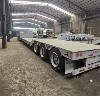
Dump trailers can be classified into two types based on their dumping mechanism: side dump trailers and rear dump trailers. Both types of trailers have their own advantages and disadvantages, which we will explore in this discussion.
Side Dump Trailers:
Side dump trailers are designed to tilt to the side, allowing for efficient unloading of materials. Here are some key characteristics and benefits of side dump trailers:
Versatility: Side dump trailers offer versatility in terms of unloading. They are ideal for jobs where unloading to the side is more practical, such as in tight spaces or when working next to existing structures.
Easy Unloading: Side dump trailers allow for quick and easy unloading of materials. The ability to dump to the side eliminates the need for maneuvering the trailer or raising it to a steep angle.
Stability: Side dump trailers have a lower center of gravity compared to rear dump trailers, offering greater stability when unloading. This makes them a safer choice, especially when working on uneven or sloping terrain.
Flexibility: Side dump trailers can dump their content in a controlled manner at any desired location, making them suitable for spreading materials evenly, such as grading a road or leveling a landscape.
However, side dump trailers also have some limitations:
Limited Capacity: Side dump trailers typically have a smaller payload capacity compared to rear dump trailers. This may limit their usage for larger-scale projects or carrying heavier loads.
Higher Cost: Side dump trailers can be more expensive compared to rear dump trailers due to their design and mechanism. They often require additional hydraulics and structural support to ensure safe and efficient operation.
Rear Dump Trailers:
Rear dump trailers are the more commonly seen type. They tilt backward to unload materials from the rear end. Let's explore the advantages and characteristics of rear dump trailers:
Increased Capacity: Rear dump trailers are generally designed to carry larger loads compared to side dump trailers. This makes them suitable for heavy-duty hauling and large-scale construction projects.
Simplicity: Rear dump trailers have a straightforward design and operation. They do not require additional hydraulics or mechanisms, allowing for simpler maintenance and potentially lower costs.
Accessibility: Rear dump trailers can be easily loaded from the rear, making it convenient for various materials, including loose bulk items, debris, or large equipment.
However, rear dump trailers also have some limitations:
Limited Unloading Flexibility: Rear dump trailers dump materials in one location directly behind the trailer. This may not be suitable for jobs that require spreading materials or unloading in specific areas.
Higher Risk of Tipping: Rear dump trailers have a higher center of gravity when compared to side dump trailers. This can increase the risk of tipping over when unloading on uneven terrain or when carrying an unbalanced load.
In summary, both side dump trailers and rear dump trailers have their own advantages and disadvantages. The choice between the two depends on the specific requirements of the job, the desired unloading method, payload capacity, terrain conditions, and budget considerations.