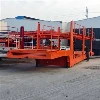
Flatbed semi-trailers are a popular choice for transporting containerized cargo by sea. These versatile trailers feature a flat, open deck design that can accommodate a wide range of container sizes, from 20-foot to 40-foot units. The low-profile deck allows for easy loading and unloading of containers using terminal equipment, such as reach stackers and gantry cranes.
When preparing a flatbed semi-trailer for ocean shipping, the first step is to secure the containers firmly to the trailer's deck. This is typically done using twist locks, which are specialized locking mechanisms that attach the container's corner castings to the trailer's tie-down points. Proper securement is crucial to ensure the cargo's stability and prevent shifting during the voyage.
Once the containers are secured, the semi-trailer is ready for transport to the port terminal. At the terminal, the entire trailer, with the containers still attached, is lifted onto the ship using a specialized crane or a roll-on/roll-off (RORO) system. This efficient loading method minimizes handling and reduces the risk of damage to the cargo.
During the sea journey, the flatbed semi-trailer and its contents are stowed securely on the ship's deck, where they are protected from the elements. Upon reaching the destination port, the process is reversed, with the semi-trailer being offloaded and transported to its final delivery point.
The use of flatbed semi-trailers for container shipping offers several advantages. The versatility of the platform allows for the transport of a wide range of cargo types, from standard containerized goods to oversized or oddly shaped items. Additionally, the reduced handling and streamlined loading/unloading processes can improve efficiency and reduce the overall cost of the shipping operation.