

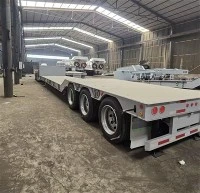
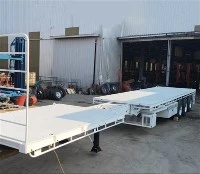

Hydraulic Modular Trailer
The system relies on independent hydraulic axle-line modules. These modules can be connected longitudinally and laterally to build a transport platform customized to the weight, dimensions, center of gravity, and route conditions of the cargo.
Hydraulic modular trailers are multi-axle transport platforms designed for heavy and oversized cargo that exceeds the load capacity and dimensional limits of conventional lowbed or extendable trailers.
The system relies on independent hydraulic axle-line modules. These modules can be connected longitudinally and laterally to build a transport platform customized to the weight, dimensions, center of gravity, and route conditions of the cargo.
Common applications include power transformers, heavy generators, industrial machinery, bridge sections, petrochemical equipment, and large structural components that require controlled axle-load distribution and precise maneuverability.
Submit your cargo weight, dimensions, center of gravity, and route requirements to receive a recommended axle-line configuration and technical proposal.
Hydraulic Modular Trailer Overview
|
Item |
Configuration |
|
Equipment Type |
Hydraulic modular heavy-haul transport platform |
|
Traction Mode |
Towed by heavy-duty ballast or heavy-haul tractors |
|
Combination Layout |
Longitudinal (end-to-end) and lateral (side-by-side) configurations |
|
Axle Configuration |
Multiple independent hydraulic axle lines |
|
Suspension System |
Independent hydraulic suspension with stroke compensation |
|
Steering System |
Hydraulic or mechanical steering coordinated with project requirements |
|
Platform Structure |
Heavy-duty modular loading platform |
|
Primary Applications |
Oversized industrial cargo, transformers, generators, structural modules |
|
Coupling Method |
Gooseneck, drawbar, or project-specific connection |
|
Customization Options |
Axle quantity, platform dimensions, steering layout, and accessories |
Core Product Advantages
Adaptable Modular Scalability
Rather than relying on a fixed-length or fixed-width chassis, the modular design allows transport companies to scale the platform dimensions up or down by adding or removing individual axle-line modules. This configurability maximizes equipment utilization across diverse project scales.
Synchronized Multi-Axle Maneuverability
The integrated hydraulic steering system coordinates steering angles across multiple independent axle lines. This ensures precise tracking through urban intersections, industrial plant gates, and restricted mountain passes, preventing tire scrub and excessive ground wear under heavy loads.
Dynamic Load Equalization
Independent hydraulic suspension cylinders maintain equalized load distribution across all axle lines, even when traveling over uneven terrain, rough construction sites, or unpaved access roads. This prevents localized overloading on individual axles and protects the cargo structure from torsion.
Heavy-Duty Structural Integrity
Main frames are fabricated using high-yield structural steel designed to withstand concentrated industrial loads, continuous cyclic stresses, and repeated assembly and disassembly cycles in demanding field environments.
Typical Applications
Power Transformer Transport
Large power transformers involve high concentrated loads and strict regulatory limits on axle loading. Modular hydraulic trailers allow the number and arrangement of axle lines to match the transformer's exact support points.
Power Generation Equipment
Configurations can be engineered for:
Turbine components and rotors
Large generators and stators
Industrial motors and pumps
Heavy boiler equipment
Petrochemical and Industrial Plant Equipment
Hydraulic modular trailers transport oversized industrial vessels that exceed conventional road trailer capacities. Typical loads include:
Pressure vessels and reactors
Industrial heat exchangers
Distillation columns
Modular process skids
Bridge and Infrastructure Components
Side-by-side and end-to-end module configurations provide stable platforms for civil engineering cargo, including:
Precast bridge sections
Large structural steel trusses
Infrastructure modules
How the Hydraulic Modular Trailer Operates
Longitudinal (End-to-End) Combination
Modules are connected end-to-end when the transport requires a longer platform length. This layout is utilized for:
Long industrial components
Bridge girders and sections
Large industrial machinery
Structural steel assemblies
Long plant modules
Lateral (Side-by-Side) Combination
Modules are connected side-by-side when the cargo requires a wider support surface. This layout is suited for:
Wide power transformers
Heavy industrial pressure vessels
Large generators and turbines
Oversized construction equipment
Combined Configuration
Complex, oversized, and ultra-heavy cargo often utilizes both longitudinal and lateral combinations simultaneously. The total number of axle lines and module layout are engineered according to the required payload and allowable axle-load limits.
Hydraulic Steering for Heavy-Haul Operations
Heavy and oversized cargo operations require precise maneuvering capabilities along complex transport routes. Hydraulic steering systems enable multiple axle lines to follow a synchronized steering angle during tight turns.
The steering layout is selected based on:
Tractor configuration
Trailer combination length and width
Required turning radius
Route constraints and obstacles
Cargo dimensions
Steering geometry is engineered in coordination with the complete trailer combination to ensure tracking accuracy and maneuverability.
Heavy-Duty Modular Frame Structure
The modular frame transmits concentrated loads from heavy industrial cargo through the loading platform, main structural beams, and axle assemblies.
Heavy-haul frame design focuses on:
Bending strength and torsional resistance
Local load concentration management
Module connection and coupling strength
Efficient load transfer to axle lines
Durability under repeated assembly and disassembly
Structural dimensions and material grades are selected according to the required payload and operating environment.
Key Configuration Options
Axle-Line Quantity: Determined by total cargo payload, permitted axle loads, support points, and safety margins.
Platform Width: Standard module widths can be combined laterally to expand the loading surface.
Platform Height: Deck height is adjustable within the hydraulic suspension stroke to clear obstacles, ramps, or low bridges.
Steering System: Configured for mechanical or hydraulic steering based on module count and maneuverability requirements.
Tractor Connection: Configured for ballast tractor operation using hydraulic goosenecks, drawbars, or specialized coupling systems.
Manufacturing and Quality Control
Manufacturing operations utilize CNC cutting systems, automatic welding equipment, plasma cutting machines, and specialized alignment verification equipment to ensure structural precision.
Quality control focuses on structural and operational safety components:
High-strength structural steel verification
Main frame weld inspection
Hydraulic cylinder pressure testing
Hydraulic line and connection integrity
Axle assembly and steering component checks
Braking system testing
Module coupling point verification
Wheel alignment and geometry inspection
Weld and dimensional inspections are strictly maintained due to the heavy cyclic loads and complex stresses experienced by modular equipment during transport operations.
FAQ
Q: How is the total number of axle lines calculated for a specific project?
A: The required axle lines are calculated based on the total cargo weight, the maximum allowable axle load mandated by regional road regulations, the cargo's center of gravity, and the number of structural support points. The layout is engineered to ensure weight distribution stays within legal and mechanical safety limits.
Q: Can different module capacities or types be coupled together?
A: Modules within the same structural series can generally be combined longitudinally or laterally. However, coupling modules from different structural generations or varying platform heights requires specialized transition beams and engineering verification to ensure frame rigidity and uniform load transfer.
Q: What is the typical procedure if a transport route has tight turns or low overhead bridges?
A: For restricted routes, the hydraulic suspension allows the platform height to be raised or lowered dynamically to clear obstacles. Additionally, the hydraulic steering system can be adjusted to coordinate turning angles across all axle lines, reducing the turning radius and ensuring the trailer tracks behind the tractor safely.
Q: What kind of tractor is required to tow a hydraulic modular trailer?
A: These trailers are typically towed by heavy-haul ballast tractors or heavy-duty prime movers equipped with high-capacity fifth wheels or heavy-duty drawbar connections. The tractor must provide adequate tractive effort, matching hydraulic power supply capabilities for steering/suspension if required, and a compatible braking control system.
Q: What documentation is provided along with the equipment delivery?
A: Deliveries include comprehensive technical documentation consisting of general assembly drawings, hydraulic and pneumatic schematics, operation and maintenance manuals, component spare parts catalogs, and factory inspection or test reports.
Hot Tags: hydraulic modular trailer, China hydraulic modular trailer manufacturers, dump semi trailer, semi trailer electricians, semi trailer hire, semi trailer operation, semi trailer strategy, semi trailer supplier
You Might Also Like



Send Inquiry