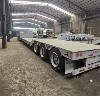
Starting from 2005, China will implement a new statistical classification of vehicle models in the automotive industry. This classification is the first important reform in the statistical classification of vehicle types in China's automotive industry, and it is also to meet the needs of international integration after joining the WTO, which has a profound impact on the development of the automotive industry in the future.
First, let's take a look at the relevant situation of the old classification. The old classification was formulated in 1988 in accordance with GB/T3730.1-88 and is divided into three major categories, namely trucks, buses, and sedans. Each category is further classified according to different classification standards, specifically:
Trucks are divided into (based on total mass): 1 and heavy-duty trucks (with a total mass greater than 14 tons); 2. Medium duty trucks (6 tons The new statistical classification of vehicle models is formulated with reference to the two national standards GB/T3730.1-2001 and GB/T15089-2001, and in conjunction with the development status of China's automotive industry. Its major classification is basically consistent with the commonly used international terms, divided into two categories: passenger cars and commercial vehicles. Due to the lack of unified standards for vehicle segmentation in various countries, the detailed classification of passenger cars and commercial vehicles is based on China's own characteristics. The specific situation of the new classification is described as follows:
Compared to the old classification, passenger cars include sedans, micro buses, and light buses with no more than 9 seats, while trucks and buses with 9 or more seats are not considered passenger cars. There is a special situation where we consider some models such as the Jinbei Sea Lion, which have both 9 or more seats and less in the same length. In actual statistics, these vehicles are all classified as commercial vehicles and will not be repeated in the following interpretation of commercial vehicles.
A commercial vehicle designed and equipped primarily for carrying goods, whether it can tow a trailer or not.
Similar to the new classification of passenger cars, the meaning of trucks in the new classification is also smaller than that of trucks in the old classification. The corresponding relationship is that trucks in the old classification=(trucks+semi trailer tractors+incomplete trucks) in the new classification.
The breakdown of trucks is based on total mass, usage, and fuel type.
A commercial vehicle equipped with a special device for towing semi trailers.
After China's accession to the WTO, the port transportation volume has been increasing, providing opportunities for the development of semi trailer tractors. In recent years, this model has developed rapidly. In the old classification, semi-trailer tractors were included in the statistics of cargo vehicles and were not listed separately. The new classification was listed separately as a major category of commercial vehicles.
For semi-trailer tractors, the vehicle classification is based on the mass of the semi-trailer tractor in motion, plus the maximum vertical static load transmitted by the semi-trailer to the tractor, and the sum of the tractor's maximum designed loading mass (if any).
The above classification information is mainly used for the statistical work of the National Bureau of Statistics and the Automobile Industry Association.
Aug 24, 2023
Leave a message
Classification of Trucks
Previous
Truck manufacturerNext
What is a truckSend Inquiry