


Extendable Bridge Beam Trailer
The trailer working length is configured around actual cargo dimensions and designated support positions. Chassis structure, axle arrangement, beam support design, braking system, and suspension are selected according to cargo weight, transport dimensions, road conditions, and local transport regulations.
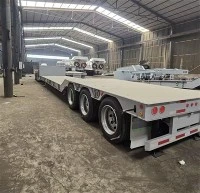
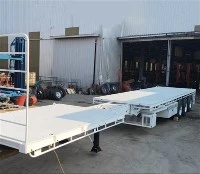
The Extendable Bridge Beam Trailer is a project-configured heavy haul semi-trailer designed for transporting long and heavy bridge beams, precast concrete girders, steel bridge sections, and other oversized structural components.
The trailer working length is configured around actual cargo dimensions and designated support positions. Chassis structure, axle arrangement, beam support design, braking system, and suspension are selected according to cargo weight, transport dimensions, road conditions, and local transport regulations.
Utilizing an adjustable longitudinal structure provides a flexible transport envelope while allowing the trailer to remain more compact during empty returns or standard transport.
Typical Cargo: Precast concrete beams, prestressed girders, steel bridge girders, box girders, long bridge sections, and structural steel members.
Configuration: Project-specific engineering.
Transport Type: Heavy haul and oversized cargo transport.
Extension Capability: Engineered according to required working length.
Axle Configuration: Selected based on payload capacity and road regulations.
Typical Applications
The trailer can be engineered for various heavy transport sectors:
Precast Concrete Bridge Beams: Transporting long precast and prestressed concrete members used in highway and railway infrastructure.
Steel Bridge Girders: Providing a stable, adjustable platform for fabricated steel girders and long bridge spans.
Box Girders: Accommodating the specific dimensions, weight distribution, and support locations of concrete or steel box girders.
Long Structural Components: Hauling industrial columns, heavy trusses, and other oversized fabrications.
Target Industries
Bridge construction contractors
Precast concrete manufacturers
Structural steel fabricators
Heavy transport and logistics operators
Infrastructure project developers
Equipment rental enterprises
Why Use an Extendable Bridge Beam Trailer?
Bridge beams and long structural components frequently exceed the practical loading length of conventional flatbed or lowbed trailers. Fixed-length trailers often introduce excessive overhang, require specialized escort arrangements, or fail to align with the specific support points required by structural engineers.
An extendable bridge beam trailer addresses these operational challenges through an adjustable longitudinal chassis.
Working Length Matching: Adapts the distance between tractor and rear bogie to match the beam length.
Accurate Support Positioning: Positions support blocks exactly where specified by the beam manufacturer to avoid excessive bending moments.
Load Distribution: Distributes heavy concentrated loads evenly across selected axle lines.
Structural Stiffness: Maintains longitudinal rigidity under heavy static and dynamic loads.
Retracted Compactness: Reduces overall length when unladen for easier maneuvering.
Regulatory Compliance: Aligns axle loads and dimensions with regional transport limitations.
For heavy-haul operators and bridge contractors, trailer selection must be driven by cargo data and engineering calculations rather than nominal payload ratings alone.
Extendable Structure and Chassis Engineering
The primary distinction of this trailer is its adjustable longitudinal framework. The extension section maintains structural integrity and torsional stiffness while allowing the overall deck length to vary.
Design Considerations for Extension
Extension Range: Determined by minimum and maximum transport lengths.
Locking and Guidance: Mechanical locking pins, hydraulic sliding mechanisms, or guided track systems depending on the project.
Bending Moment Management: Reinforcement around sliding joints to counteract high bending stresses.
Center of Gravity: Factored into the overall chassis layout to ensure stability during transport and cornering.
Main Beam and Chassis Materials
High-strength structural steel, such as high-yield quenched steel grades (comparable to Q345B and higher grades depending on load requirements), is utilized for primary longitudinal members, flanges, and high-stress load-bearing zones.
Beam Height and Flange Thickness: Selected based on payload capacity and bending calculations.
Cross-Member Spacing: Optimized to prevent lateral twisting under concentrated loads.
Reinforcement Plates: Added at high-stress transition areas and support interfaces.
Manufacturing and Quality Control
Heavy haul trailers require rigorous fabrication processes to ensure structural safety under high loads. Manufacturing facilities utilize heavy-duty industrial equipment, including CNC plasma cutting machines, automatic submerged arc welding systems, CNC drilling units, X-ray non-destructive testing equipment, and laser wheel alignment systems.
Plate Preparation: Steel plates are cut via CNC machinery to ensure dimensional precision before assembly.
Welding Execution: Main longitudinal beams are fabricated using automatic submerged arc welding to ensure deep penetration and uniform weld seams.
Dimensional Checks: Chassis dimensions, axle alignment, and support interfaces are verified during and after structural assembly.
Weld Inspection: Critical load-bearing welds undergo rigorous inspection and non-destructive testing when specified by project requirements.
Surface Preparation: Steel structures undergo thorough shot blasting to remove scale and impurities prior to multi-layer painting.
Final Testing: Completed trailers undergo inspections covering running gear installation, pneumatic system pressure tests, electrical functionality, and dimension verification prior to shipment.
How to Select the Right Configuration
Confirm Maximum Cargo Weight: Identify the heaviest beam or component in the project scope.
Determine Cargo Dimensions: Collect overall length, width, height, and cross-section profiles.
Identify Support Points: Obtain the precise distance between required support locations from the structural drawings.
Calculate Working Length: Determine the minimum retracted length and maximum extended length required for turning radii and site access.
Analyze Axle Loads: Check total weight distribution against destination road regulations.
Verify Tractor Specs: Ensure fifth-wheel height, towing capacity, and hydraulic/pneumatic connections match the trailer.
Confirm Local Regulations: Verify dimensional limits, weight permits, and lighting compliance for the operating region.
FAQ
Q: What is an extendable bridge beam trailer used for?
A: It is utilized for transporting long, heavy precast concrete beams, steel girders, and oversized structural components that exceed the capacity of standard flatbed trailers.
Q: How is an extendable trailer different from a standard lowbed trailer?
A: An extendable trailer features an adjustable longitudinal frame that allows the working deck length to expand or retract, accommodating different beam lengths while maintaining proper support spacing.
Q: How long can the trailer extend?
A: Extension lengths are not universal; they are custom-engineered based on project cargo dimensions, weight distribution, and turning requirements.
Q: Can the trailer transport precast concrete beams?
A: Yes. Precast and prestressed concrete bridge beams are primary applications, provided that cargo weight and support locations are confirmed during the engineering phase.
Q: Can axle counts and brands be customized?
A: Yes. Axle quantities, spacing, and brand specifications (such as FUWA or BPW) can be tailored to meet local road regulations and operational preferences.
Q: What information is needed to request a quotation?
A: To receive an accurate engineering proposal, provide cargo weight, length, width, height, required support-point spacing, and the destination country. Attaching a cargo or beam drawing is recommended.
Hot Tags: extendable bridge beam trailer, China extendable bridge beam trailer manufacturers, commercial semi trailer, semi trailer capacity, semi trailer cost, semi trailer salespeople, semi trailer upgrade, semi trailer workshop
You Might Also Like


Send Inquiry